Discover Sénanque Abbey Step by Step
Discover Sénanque Abbey step by step, with a chronological route, key locations, monastic life insights and practical tips to better understand the site.
Discover Sénanque Abbey step by step, with a chronological route, key locations, monastic life insights and practical tips to better understand the site.
Sommaire
The visit to Sénanque Abbey follows a rigorous chronological route, directly inherited from the Cistercian monastic organisation. This progression is no coincidence: it reflects the way the monks structured their daily lives, between prayer, work and moments of silence.
Each space encountered helps visitors better understand their relationship to time, shaped by the rhythm of the offices, and a life deliberately oriented towards what is essential.
Far from a simple architectural discovery, the visit offers a comprehensive reading of the monastery, where each place fulfils a precise spiritual and practical function. Church, cloister, chapter house and dormitory form a remarkable coherence between the built environment, the rules of monastic life and the natural setting of the valley.
At Sénanque, architecture is never decorative: it serves a way of life, a spirituality and a sought-after balance between humankind, nature and silence.
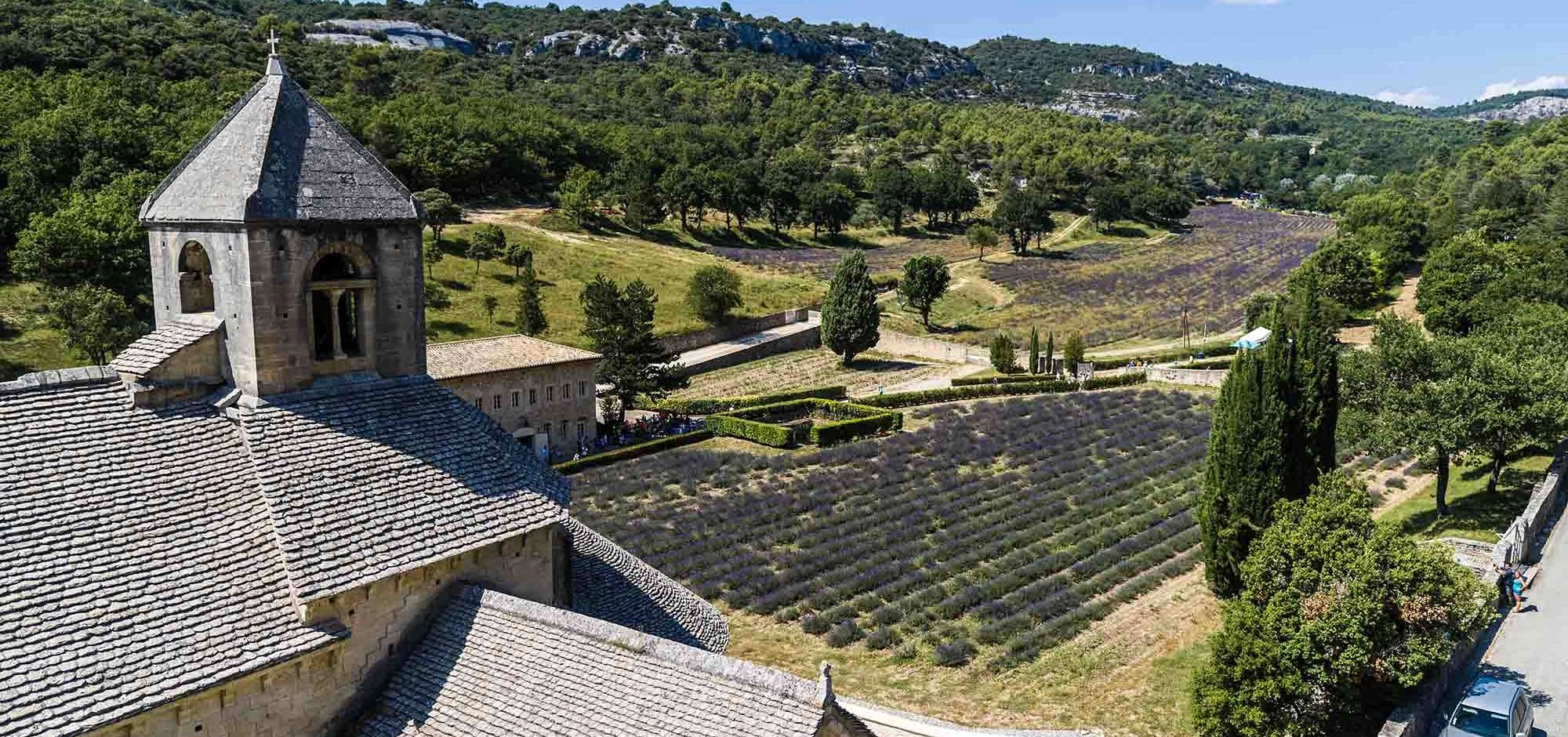
Even before crossing the abbey walls, the visit begins in the Sénancole valley. Cistercian monks sought a secluded, fertile and self-sufficient place, away from villages and commercial routes.
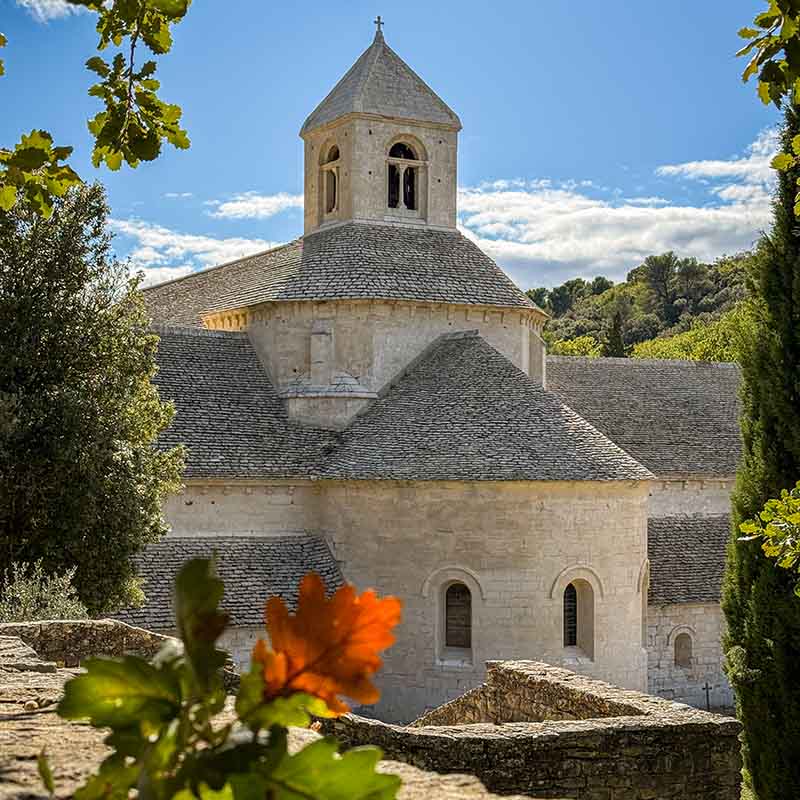
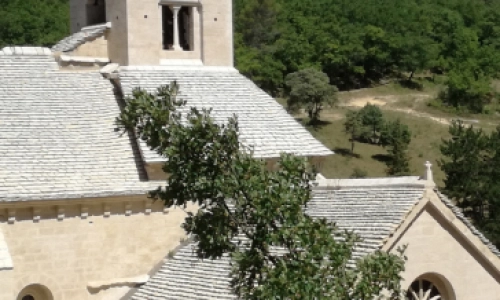
From the outside, the eye is drawn to the sobriety of the apse of the abbey church, built from local limestone. No superfluous decoration, no ostentatious monumentality: everything expresses the Cistercian ideal of austerity, discipline and harmony with the landscape.
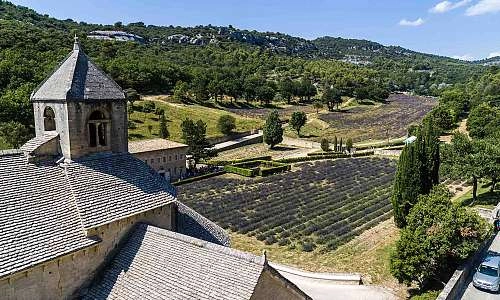
The lavandin fields, now emblematic, frame the abbey today. They remind us that Sénanque remains a place of agricultural work, faithful to the Rule of Saint Benedict.
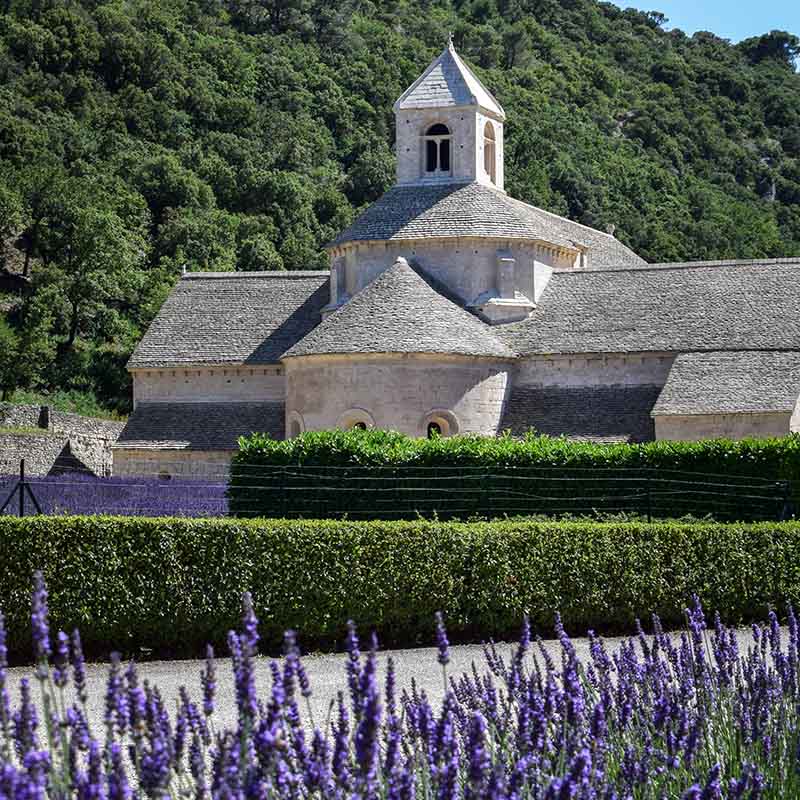
Contrary to a common misconception, this is not fine lavender but mainly lavandin, a more robust and productive plant, historically suited to the economic needs of the monastic community.
Nearby: the monks’ cemetery, deliberately simple, where anonymous graves reflect the effacement of the individual in favour of the community.
The visit continues with a welcome and introduction session, essential for understanding the logic of the monastery and the purpose of the spaces you are about to walk through. This presentation helps place the abbey within its historical, spiritual and human context.
Founded in 1148, the Abbey of Sénanque is part of the major expansion movement of the Cistercian order, driven by Saint Bernard of Clairvaux. The monks who came from the Abbey of Mazan chose this valley for its natural resources essential to the monastery’s self-sufficiency: water, stone, wood and arable land.
Three historical scale models mark this stage of the visit and make it possible to visualise the evolution of the site:
They provide a clear reading of the upheavals experienced by the abbey over the centuries, between prosperity, decline and renewal.
The monastic community was made up of ordained monks and lay brothers. The former were responsible for the liturgy and spiritual life, while the latter were more devoted to manual and agricultural work.
The Rule of Saint Benedict structures each day around a balance between prayer and work: Ora et labora. Silence is experienced as an inner disposition rather than a constraint.
The visit continues in one of the most revealing spaces of the monks’ daily life: the dormitory. Measuring more than thirty metres in length, it once housed the entire monastic community in a single shared space, in keeping with the Cistercian ideal of simplicity.
Before the 14th century, the monks slept here fully clothed, side by side, without partitions, in a spirit of strict equality among the brothers; ready to rise at any moment to join the church for the night offices.
Today, the floor still marks the location of the former cells (approximately 2 square metres per person).
A clepsydra, the ancestor of the mechanical clock, was used to measure time during the night. The stained-glass windows diffused a soft, controlled light, faithful to Cistercian aesthetics, encouraging calm and contemplation.
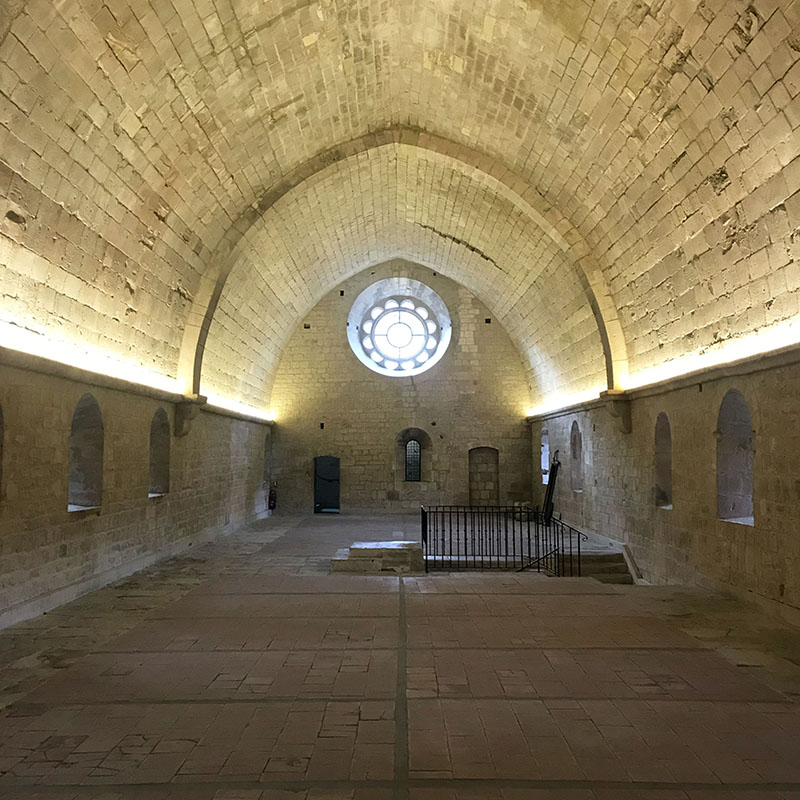
Thanks to the water clock, the sacristan would wake his brothers to call them to the first prayer at daybreak : matins (now known as vigils).
This night prayer gave its name to the famous nursery rhyme « sonnez les matines », a popular legacy of the monastic way of life.
From the dormitory, the visit highlights a discreet yet fundamental element of monastic organization : the night staircase. Directly connected to the abbey church, it allowed the monks to move from rest to prayer without breaking the silence of the monastery.
Its function is simple and essential : to provide quick access to the church for the night offices, without passing through the other communal spaces. Cistercian life is in fact punctuated by seven offices during the day and one at night, including the vigils, celebrated in complete darkness.
Here, architecture is never decorative. It is functional, rigorous, and austere, entirely designed to serve a precise timetable, regulated to the minute, where every movement carries a spiritual meaning.
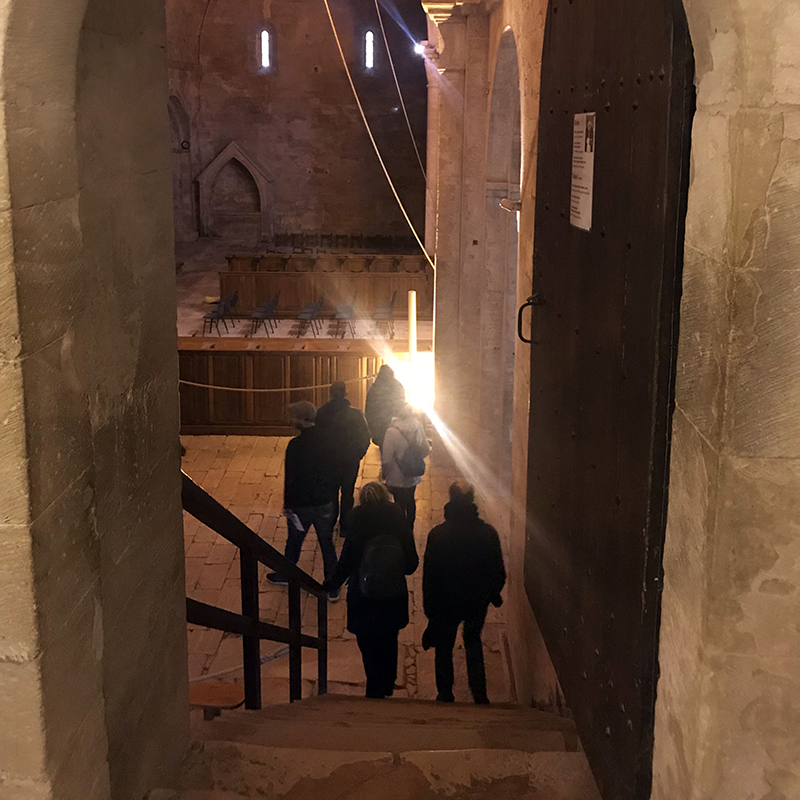
The monks would rise in the middle of the night, sometimes around 2 or 3 a.m., to make their way to the church and celebrate the night offices.
Rest was deliberately fragmented, in keeping with a logic of asceticism and spiritual discipline central to the Cistercian ideal.
The visit continues in the central place of the monastery : the abbey church. Built on the highest point of the site, it overlooks the entire abbey, both symbolically and spiritually.
From the moment one enters, the visitor is struck by the sobriety of Cistercian Romanesque architecture. There is no figurative decoration, no narrative sculpture : everything is designed to avoid distraction and to encourage contemplation.
The light, precisely filtered through small openings, accompanies prayer without ever dominating it. The proportions are human, balanced, almost soothing. The space naturally invites inward reflection.
The church is organized according to a Latin cross plan, with :
This is where the daily offices take place, still celebrated by the present-day community. During visits, access may be temporarily restricted in order to preserve these times of prayer.
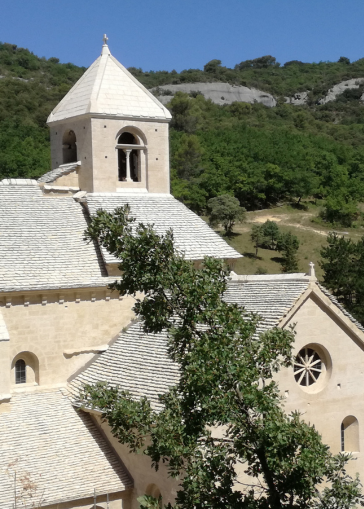
In the Cistercian tradition, beauty arises from rightness, not from ornament. At Sénanque, architecture is conceived as a true pedagogy of silence.
This radical sobriety guides the eye toward what is essential and encourages a more inward visitor experience.
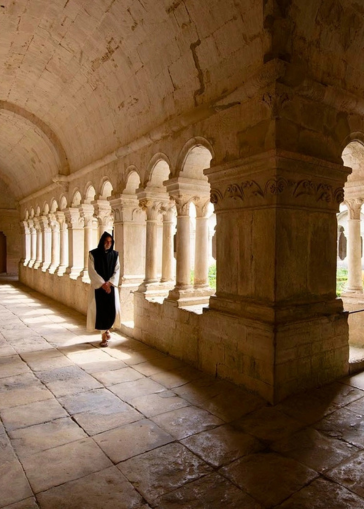
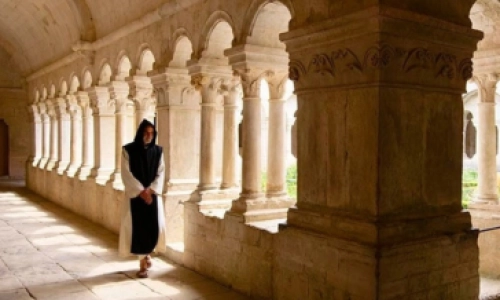
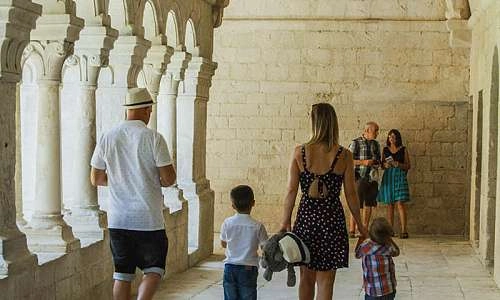
Leaving the church, the route naturally leads to the cloister, a true pivotal element of the abbey and the center of monastic life. Far from being a simple garden, it is a place of passage, meditation and silence but it is also the only space shared by the entire community of monks (lay brothers and choir monks).
Open to the sky, the cloister connects the main areas of the monastery : the church, the dormitory, the chapter house and the warming room. The monks passed through it daily, in a spirit of slowness, allowing each movement to become a moment of contemplation.
The central garden, enclosed and carefully ordered, symbolizes the paradise regained, a recurring image in monastic spirituality. Each element recalls the profound bond between humanity, Creation and God, at the heart of Cistercian thought.
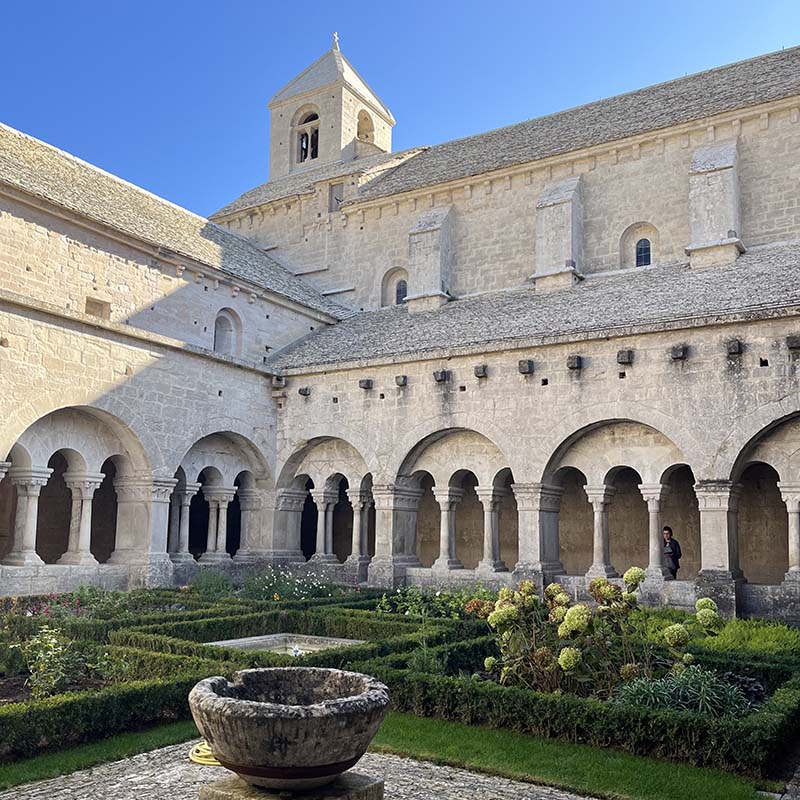
The lectio divina, a meditative reading of sacred texts, was often practiced in silence in the cloister. A monk who could not read could ask for help from a fellow brother, who would read to him in a low voice. This whispering is at the origin of the expression “Cistercian beehives.” This time of silent reading was an integral part of the monastic day.
The cloister is never a place of idleness : it supports prayer, reflection and community life.
The visit continues in the warming room, one of the few heated spaces in the abbey, along with the kitchen. In a monastery built entirely of stone, winters were particularly harsh, making these rooms essential.
The warming room served several purposes in daily life. It was a place where the monks could warm themselves, read and meditate, copy manuscripts, or carry out certain manual tasks, especially during the cold season.
The medieval fireplace, still visible today, provides tangible evidence of the monks’ daily life, far removed from any notion of superfluous comfort.
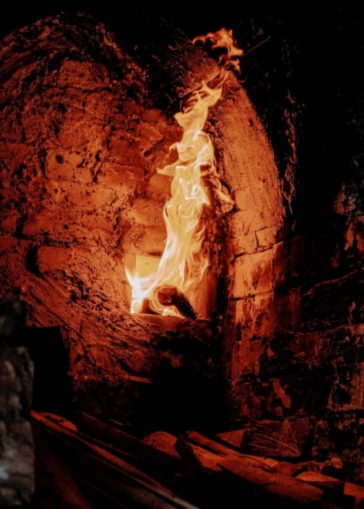
Heating was strictly regulated. Comfort was never sought for its own sake, but only when it was necessary for the work and health of the monks.
This sobriety fully reflects the ideal of asceticism embodied in the Rule of Saint Benedict.
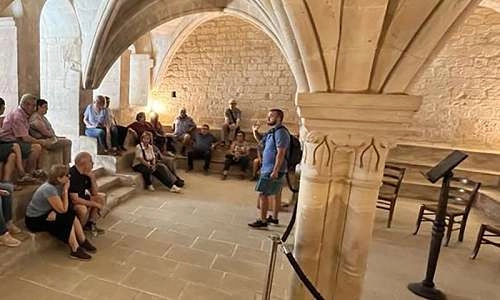
Final major stage of the visit : the chapter house. This is where the community gathered each morning for the reading of a chapter from the Rule of Saint Benedict, from which this essential space of monastic life takes its name.
The chapter house was the place where communal life was organized in practical terms. Matters discussed here included :
This space perfectly embodies the Cistercian balance between authority, humility and shared responsibility. Everyone had a place here, in a spirit of fraternity, attentive listening and the pursuit of the common good.
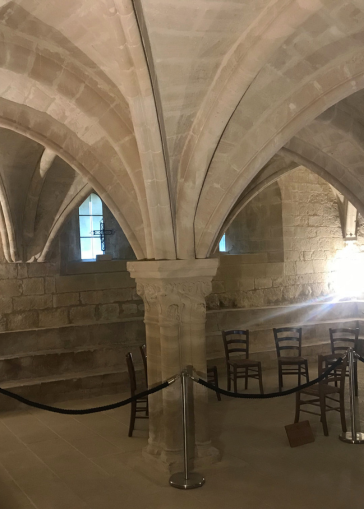
The daily reading of the Rule was not symbolic. It reminded each monk of his commitments and strengthened the cohesion of the community.
The chapter house was also the place of major decisions and moments of truth.

Prepare your visit to Sénanque Abbey
Opening hours, visiting conditions, access, recommended duration or rules to follow: before coming, take the time to consult the essential information for visiting Sénanque Abbey, a Cistercian monastery that is still inhabited.
A practical and concise page to help you plan your visit while respecting the site and monastic life.
Photo gallery
Practical information on Discover Sénanque Abbey Step by Step
Opening times and periods
Aucune information disponible
Price(s)
Informations