Behind the scenes of the grape harvest in the Luberon
Go behind the scenes of the grape harvest at Domaine de la Royère in Oppède: grape ripeness, harvesting, varieties, wines and winemaking expertise in the Luberon.
Go behind the scenes of the grape harvest at Domaine de la Royère in Oppède: grape ripeness, harvesting, varieties, wines and winemaking expertise in the Luberon.
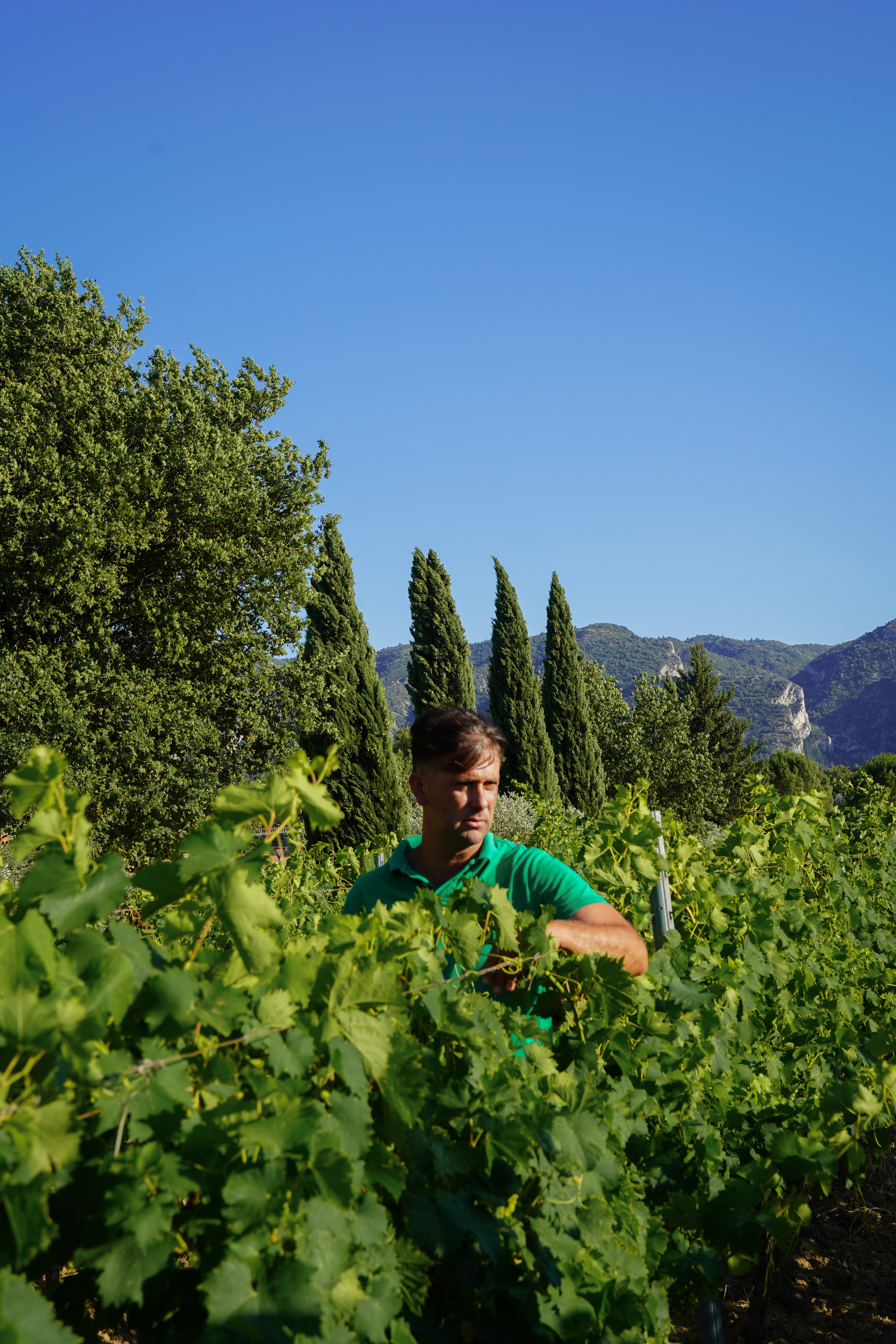
A lifelong enthusiast, Paul Gillet pursued several years of higher education, earning a master’s degree before taking the helm of Domaine de la Royère. For him, one thing is essential: winemaking cannot be improvised; it has to be learned.
Growing vines requires as much rigour as passion. He brings this high standard to every vintage and passes it on to his entire team, day after day.
A word from Paul
“We are a small team of passionate people, driven by the desire to improve each year. Our aim is to continue developing our expertise and enhancing quality, to keep refining our wines and never rest on our laurels.
We are always striving to do better, to raise our standards and bring out the very best in every vintage. In short: trying to be the best version of ourselves… but through wine.”
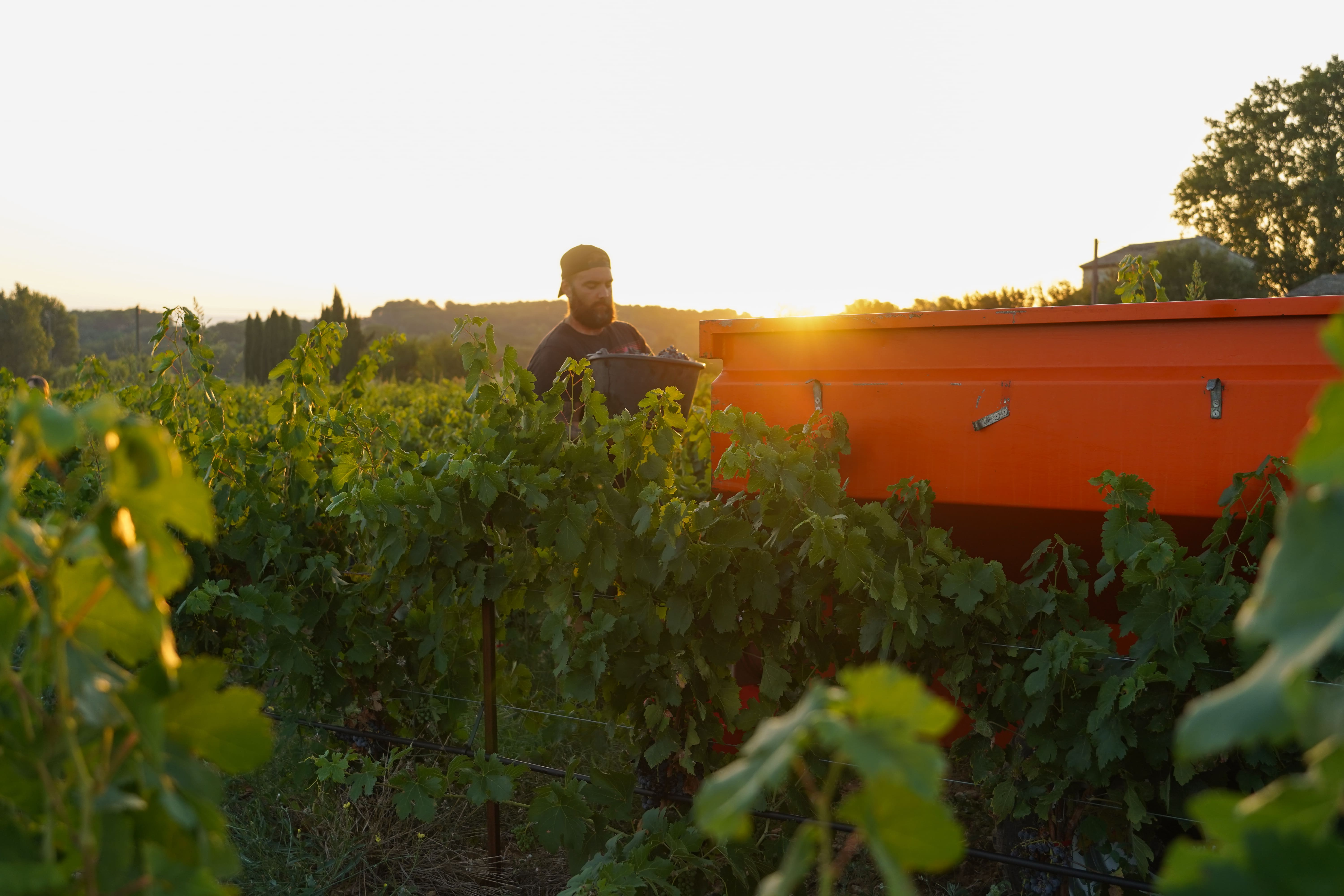
It is 5:30 am in Oppède, in the heart of the Luberon. While most of us are still asleep, a team is already hard at work among the rows of vines at Domaine la Royère.
This is no ordinary early start: if the grapes are harvested here in the middle of the night, there is a very good reason.
Paul Gillet, manager of this family-owned estate, invites us behind the scenes of one of the most intense periods of the winegrowing year.
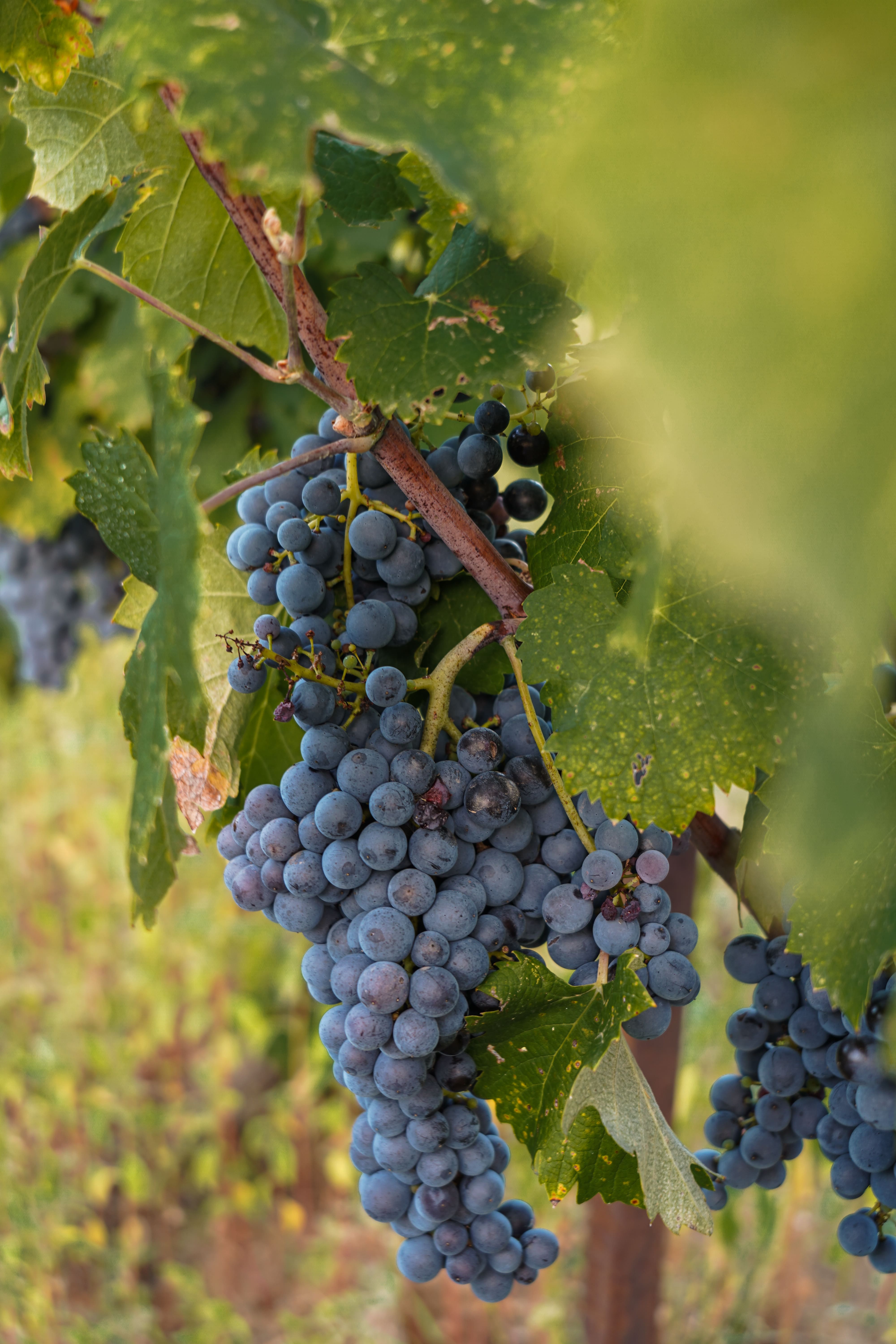
The first misconception to clear up is that there is no fixed date on the calendar that says, “It’s time, let’s go.” Each plot and each grape variety follows its own rhythm, and everything can change from one year to the next.
This year, for example, the estate harvested some plots three weeks earlier than usual, as the grapes had ripened much faster. One plot, usually harvested around 15 or 20 September with a potential alcohol level of 11% or 12%, was picked as early as 3 September, when it had already reached 13.5%.
As a result, the grape harvest can last anything from two weeks to a month and a half, depending on the year. It all comes down to the weather, the grape variety and one factor that is often overlooked: the difference between daytime and night-time temperatures. If temperatures reach 40 °C during the day and remain at 35 °C overnight, the vine can shut down and stop producing. What it needs is a significant temperature range of at least 10 °C between day and night.
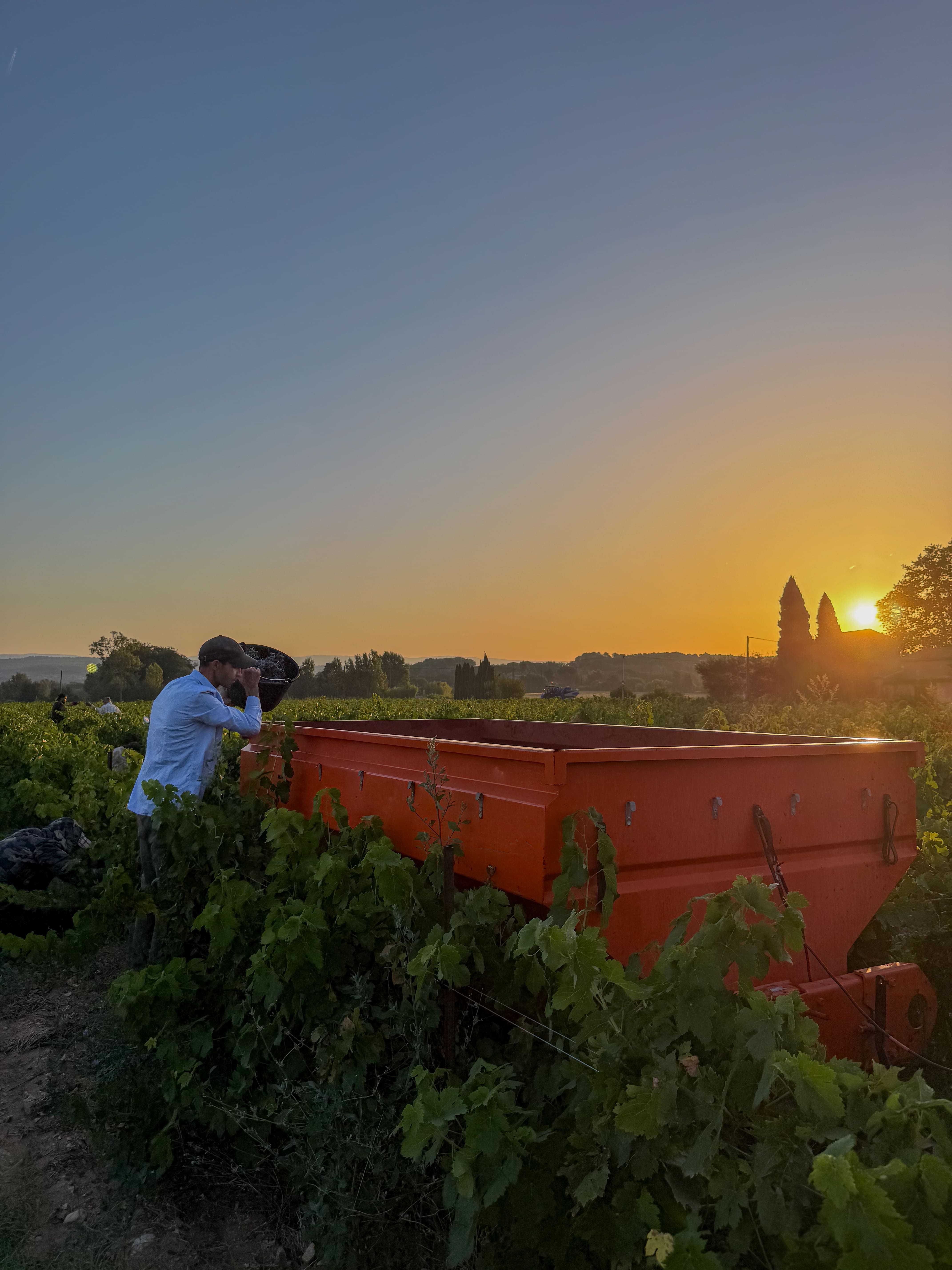
You might think that the decision to begin harvesting is based entirely on machines and laboratory analyses. In reality, it all starts with tasting.
Paul walks through the rows, tastes the berries and examines the colour of the seeds. If they are still green, it is not yet time. If they are ripe, he then uses a refractometer, a small optical instrument that measures sugar levels and confirms what the tasting has already revealed.
Laboratory analysis is mainly used to provide additional confirmation. Each grape variety has a fairly precise window of ripeness. Roussanne, for example, does not truly reveal its potential below 12% potential alcohol. Beyond 13.5% to 14%, acidity drops, making vinification more difficult and increasing the risk of instability. At around 12.5% to 13%, the balance is ideal.
As early as winter, during pruning, the winegrower begins to determine how many grapes each vine will be able to bear. Depending on the plot, the estate uses goblet pruning or the Royat cordon system, two methods that allow the crop load of each vine to be adapted to its individual characteristics.
Between June and July, a second estimate is made to refine the first, taking into account the weather, any diseases and other factors (...)
The method used to estimate the coming crop remains fairly traditional: approximately 200 berries are picked from a plot and are considered representative of a single bunch. They are weighed, and the result is then cross-referenced with the number of vines and bunches in the plot. A genuine field assessment, carried out long before the first grape is cut.
Yields at the estate are deliberately kept low, at around 30 hl/ha. This choice reduces the volume produced but results in more concentrated grapes and more refined wines.
At the estate, hand and mechanical harvesting are both used, but each meets very specific needs.
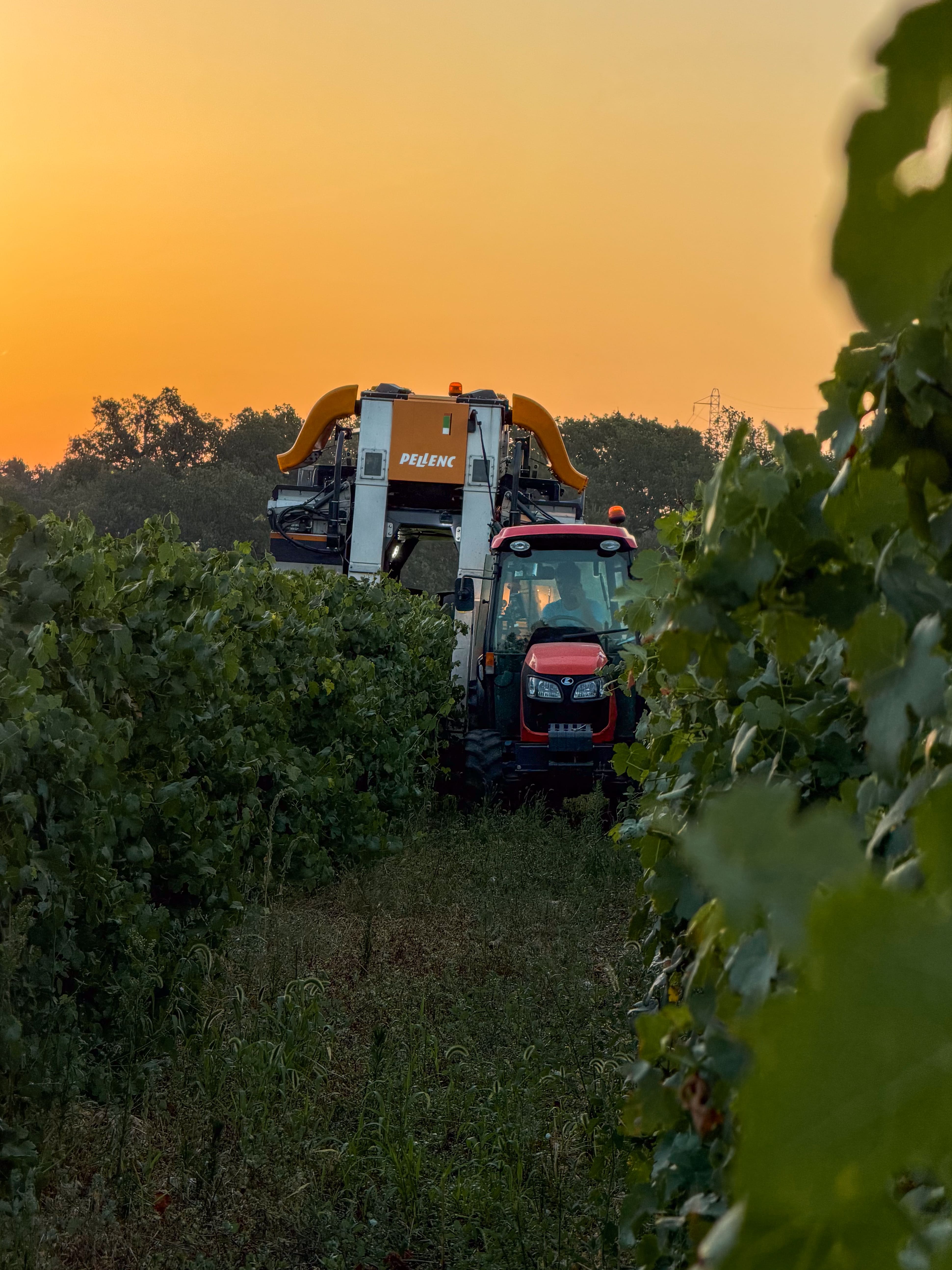
The estate mainly uses this harvesting method for its entry-level white wines and rosés.
Most importantly, the grapes are picked during the coolest hours of the day: harvesting can begin between 2 and 3 am and continue until noon or 1 pm. Harvesting at low temperatures prevents the juice from warming up and oxidising.
It also helps to limit the development of laccase, an enzyme that can rapidly alter the juice in the presence of botrytis and heat.
Once harvested, the grapes intended for white and rosé wines are transferred to a pneumatic press. They then ferment in temperature-controlled tanks, preserving their full aromatic potential and distinctive character.
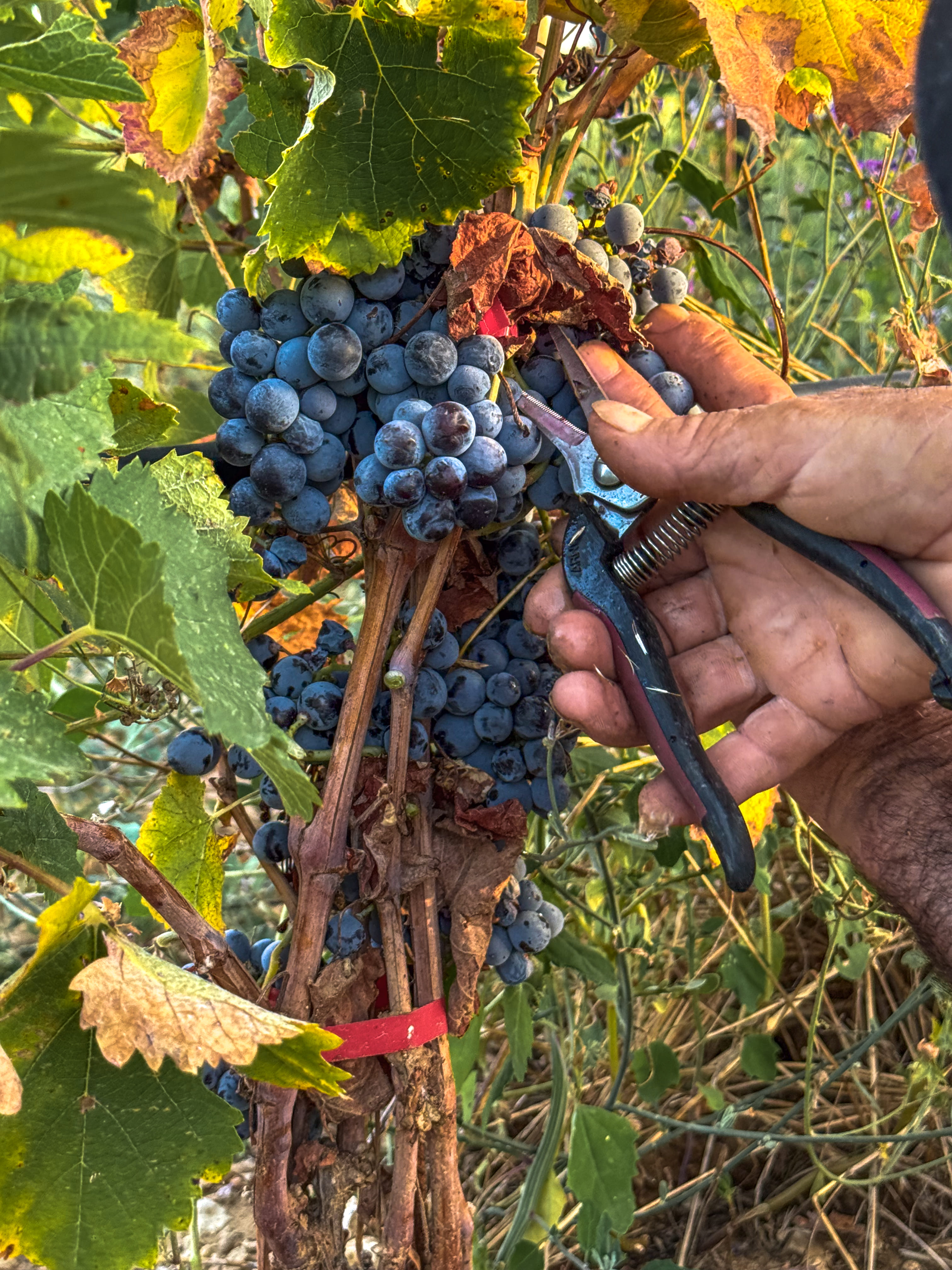
This method remains essential for old vines and premium wines. No matter how efficient it may be, a machine can damage the foliage and compact the soil. For certain vines that are more than 80 years old, or even over a century old, Paul strongly prefers using pruning shears.
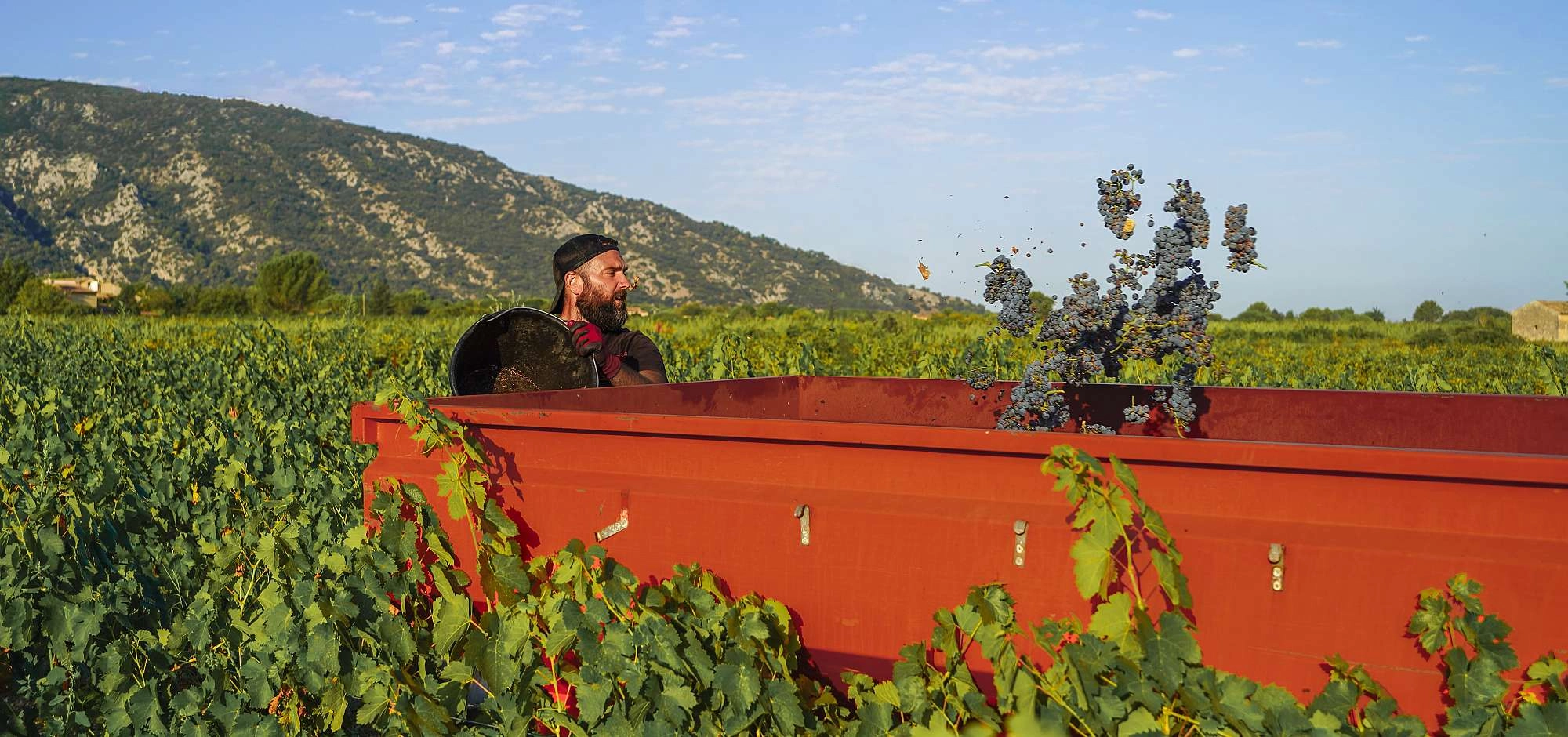
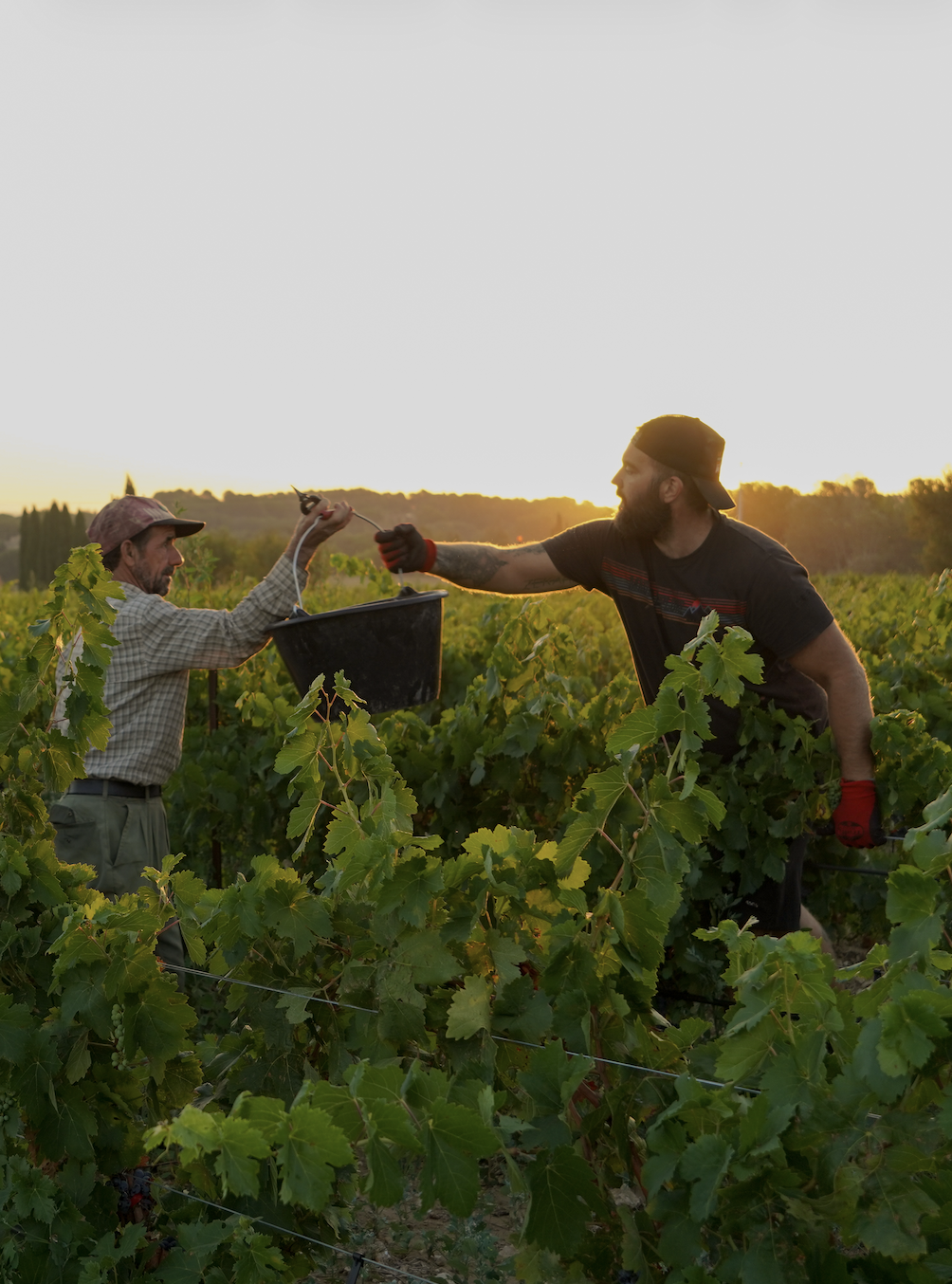
In practical terms, the grape pickers work row by row, cutting the bunches with pruning shears before placing them in their harvesting buckets. Once full, the buckets are emptied into a trailer, and the grapes are then taken to the winery.
This method takes more time, but it allows the bunches to be handled more carefully and sorted directly in the vineyard.
Even today, approximately 60% of the estate’s grapes are harvested by hand. The cost is higher: around €1,000 to €1,100 per hectare, compared with €400 to €500 for mechanical harvesting. For certain wines, however, this choice remains non-negotiable.
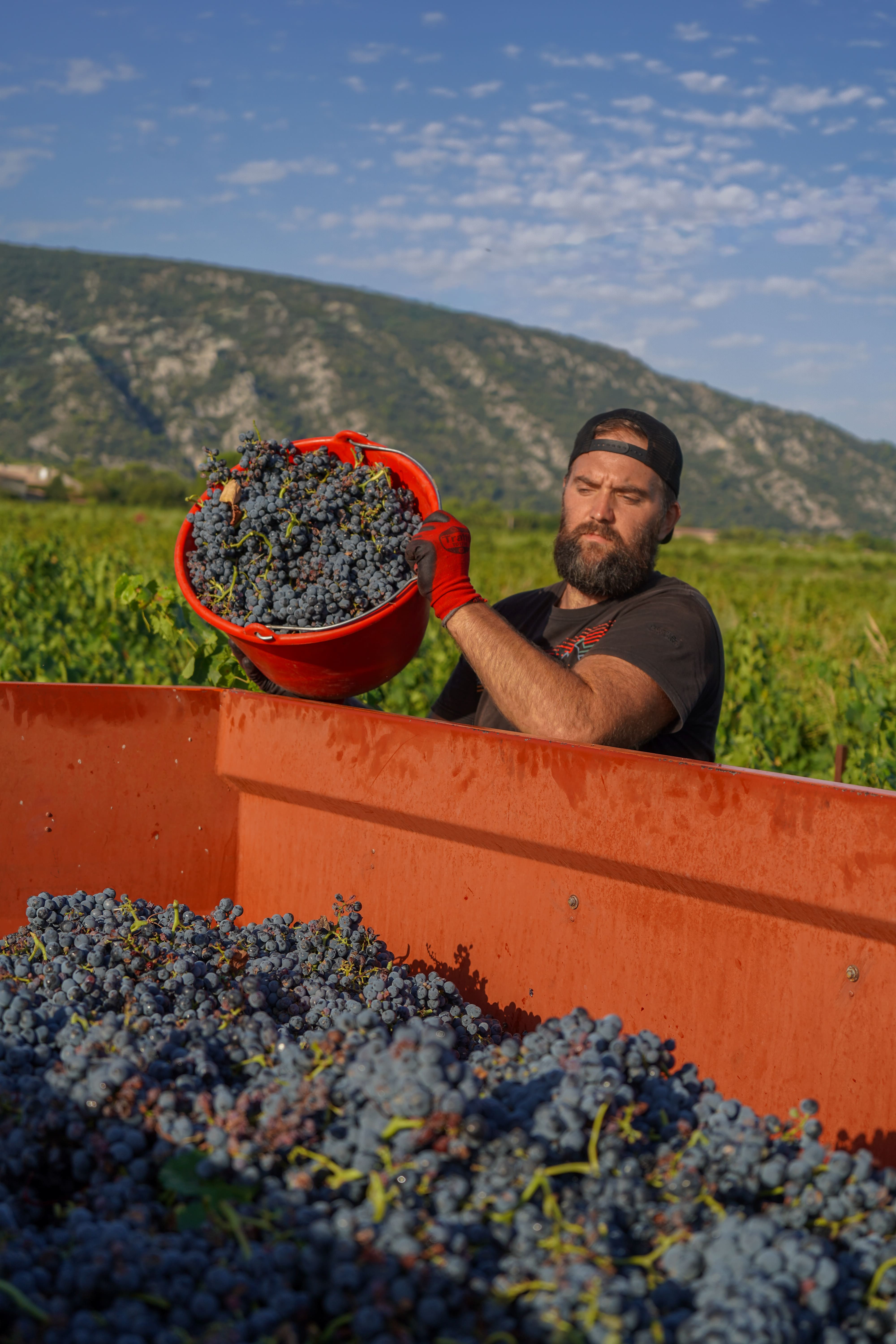
The estate grows a wonderful selection of iconic Rhône Valley grape varieties:
Each grape variety has its own personality and harvesting schedule. Syrah, for example, adds colour to the juice very quickly. It is therefore used more frequently for red wines than for rosés, for which lighter hues are preferred.
Grenache, meanwhile, is both a precious and temperamental grape variety. Its potential alcohol level rises quickly, but its acidity is more difficult to stabilise.
The estate therefore often prefers to harvest it slightly earlier to produce fresh, pale rosé wines with an alcohol content of around 13%.
In short, every grape variety has its place, depending on its strengths, its limitations and the desired style of wine.
Since beginning its conversion in 2017 and obtaining organic certification in 2020, the estate has cultivated its vines without chemical weedkillers or synthetic fertilisers. No diluted wines or additives used to conceal insufficient ripeness: instead, the grapes are grown with the utmost care, prioritising quality over quantity to reveal their natural potential.
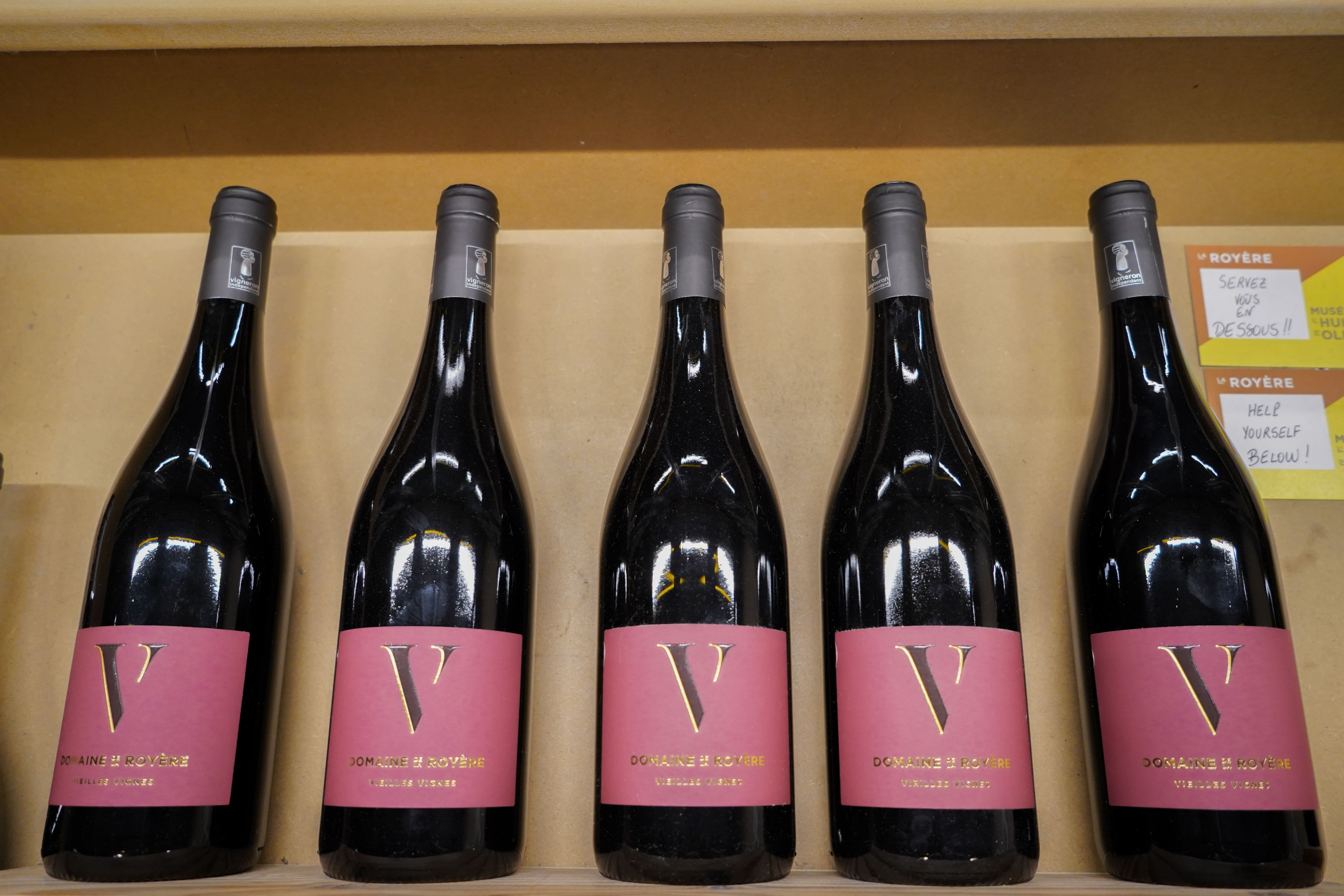
The estate’s wines showcase the great grape varieties of the Rhône Valley through red, white and rosé wines bearing the AOP Luberon, IGP Méditerranée and IGP Vaucluse designations.
The wines regularly receive awards in several competitions, including the Concours Général Agricole de Paris, the Concours des Vignerons Indépendants and the Concours des Vins d’Orange.
To learn more about the region’s appellations and terroirs, discover the wines of the Luberon.
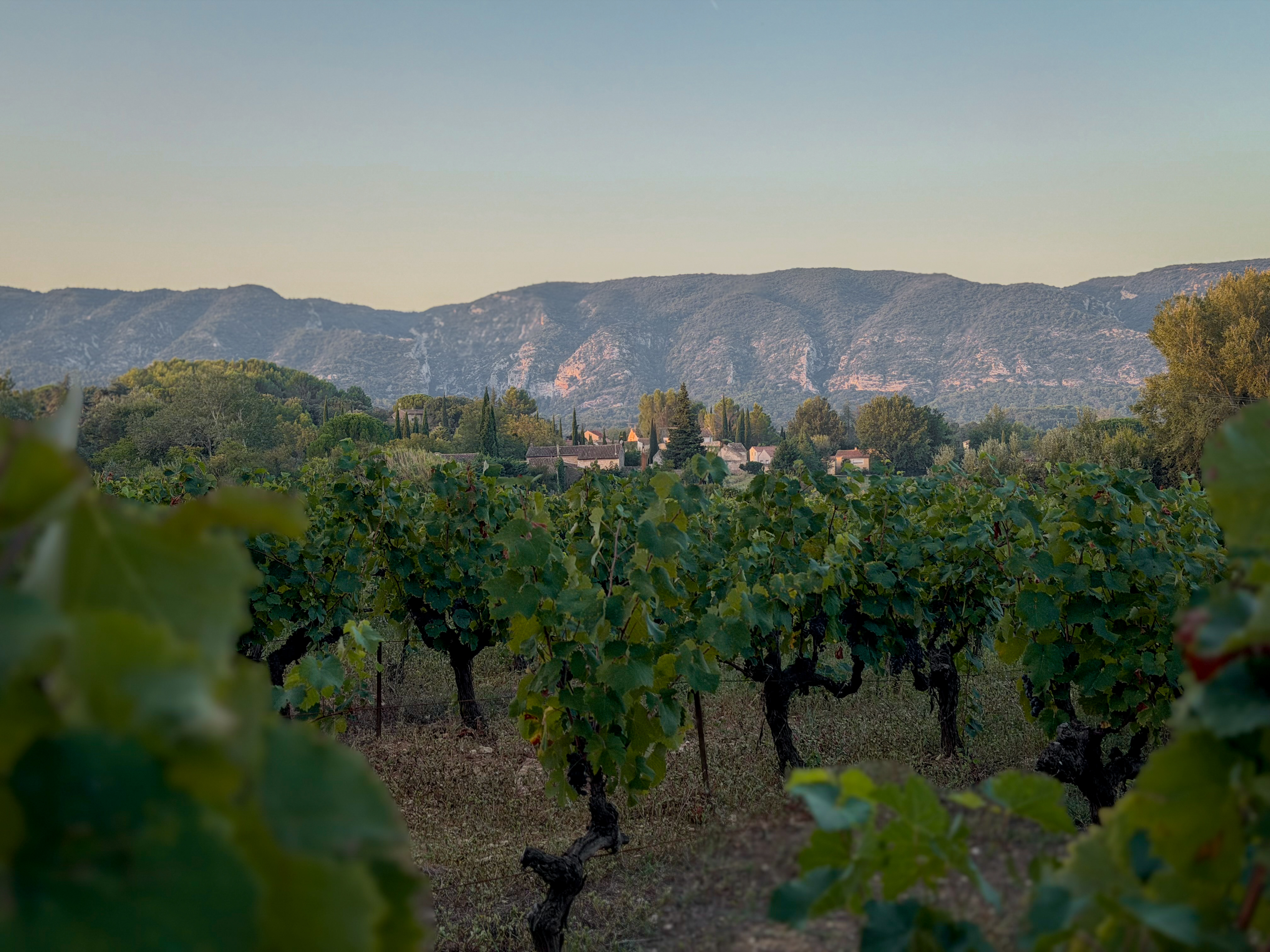
Domaine la Royère was established in 1988. Founded by the Hugues family on the land of Oppède, it extends over approximately forty hectares, where vineyards and olive groves grow side by side. Today, Paul Gillet carries on this family legacy with the same high standards passed down through the generations.
Since its acquisition by Yannick and Valérie Panagiotis, the estate has continued to develop through new projects focusing on olive trees and olive oil.
The estate now runs an olive oil school, L’Hove, and the 2026 season will also be marked by the arrival of a new olive mill. Other projects are under way to continue developing the estate and its activities.
Behind the scenes, the estate has a permanent team of four people throughout the year. During the grape harvest, a further 10 to 15 people join the team. The schedule is meticulously organised: the working day can begin very early and finish late, with work taking place both in the vineyards and in the winery.
There is no shortage of memorable stories either: in 2020 and 2022, two years with exceptionally abundant harvests, the winery was so full that some of the grapes had to be vinified directly in trailers!
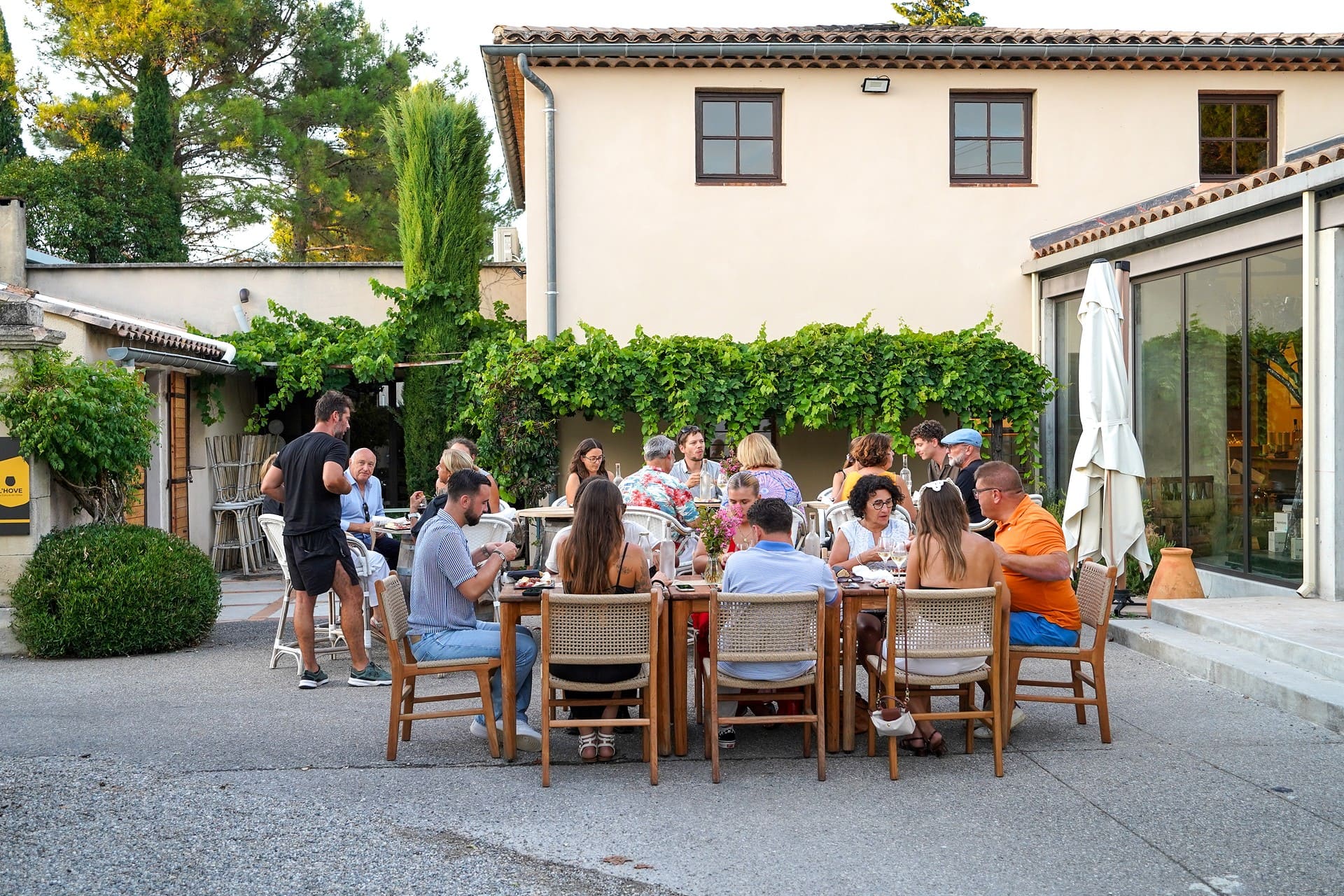
The estate can also be discovered outside the grape harvest season. Throughout the summer, the programme includes Sunsets Vignerons, concerts and evening drinks with food, offering a different way to enjoy this remarkable setting.
The flagship event remains the Sunsets Vignerons: every Tuesday evening from late June to early September, the estate opens its doors for a relaxed and welcoming evening featuring a guided walk through the vineyards, a tour of the winery and a tasting of three wines paired with delicious food.
The destination offers a wide variety of wine and food activities, as well as wine-tasting workshops where visitors can refine their palate alongside professionals.
In Oppède, in the heart of the Luberon, the team welcomes you throughout the year to discover its wines and expertise.
The estate is open from Monday to Saturday, with occasional special openings on public holidays. It is closed on Sundays.
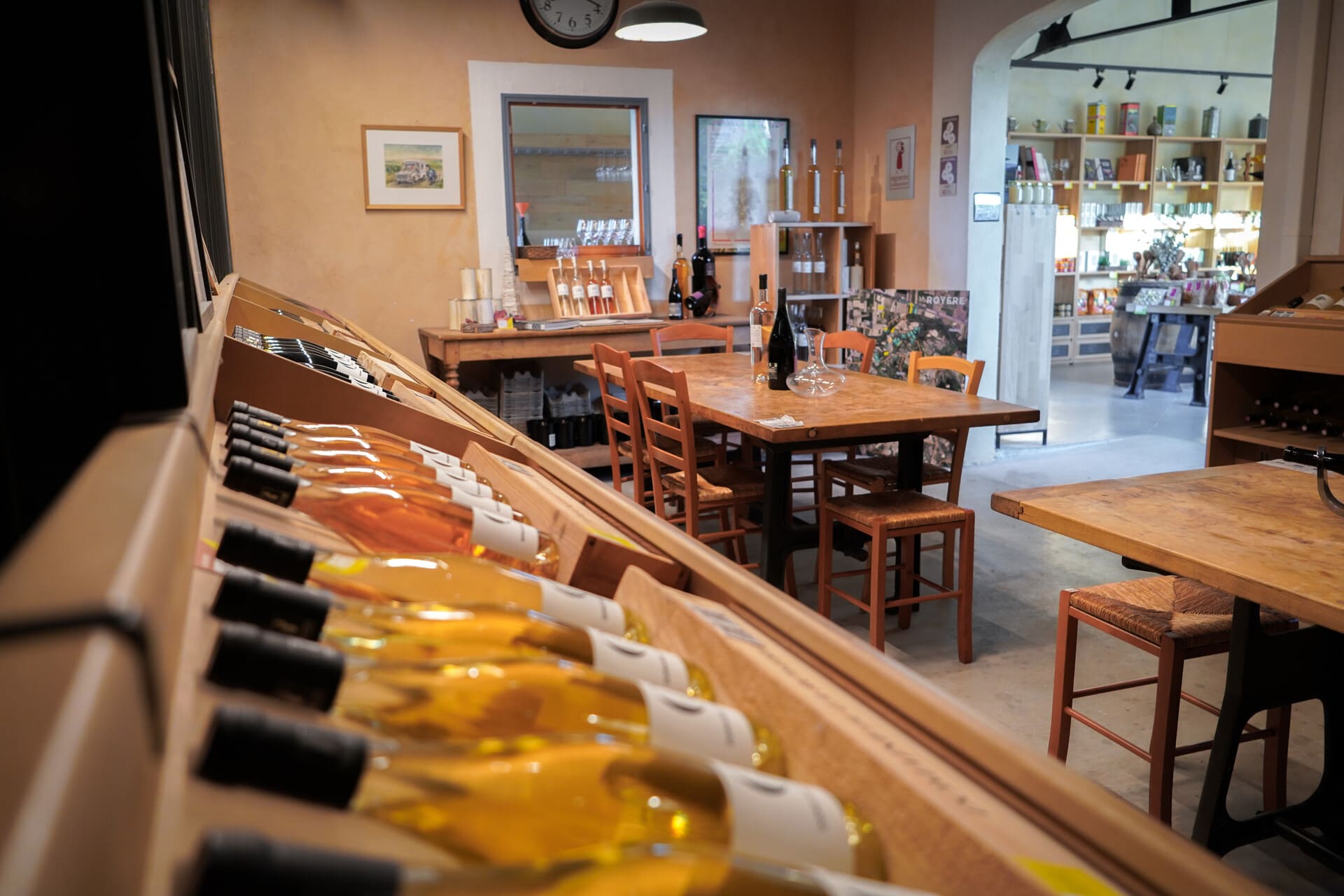
Free tours and tastings, an on-site shop, free parking and wheelchair access: everything has been designed to make your visit as easy and enjoyable as possible.
Practical information on Behind the scenes of the grape harvest in the Luberon
Opening times and periods
Aucune information disponible
Price(s)
Informations