
Sommaire
5 good reasons to visit Vaugines
In Vaugines, the visit feels like a peaceful escape in the heart of the South Luberon.
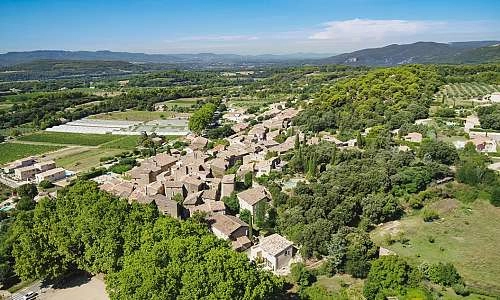
Nestled at the foot of the Luberon massif, this small village charms visitors with its winding streets, stone houses, shaded squares and untouched atmosphere. Here, everything invites you to slow down, observe the details and enjoy the Provençal sweetness of life.
Between Romanesque heritage, cinema memories, sundials, roadside shrines and hiking trails, Vaugines combines discreet charm, authenticity and beautiful landscapes. A village full of character, perfect for a contemplative getaway.
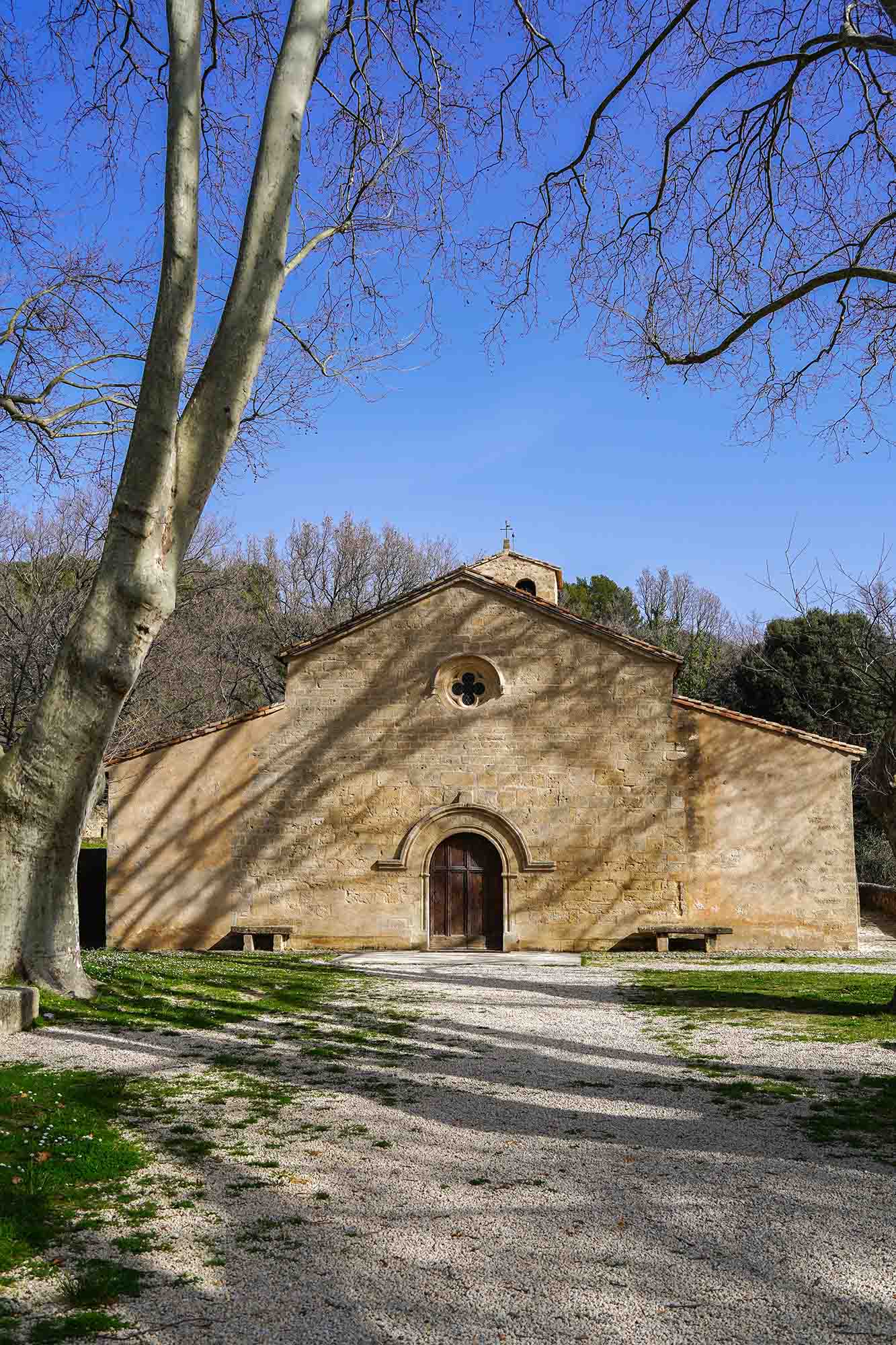
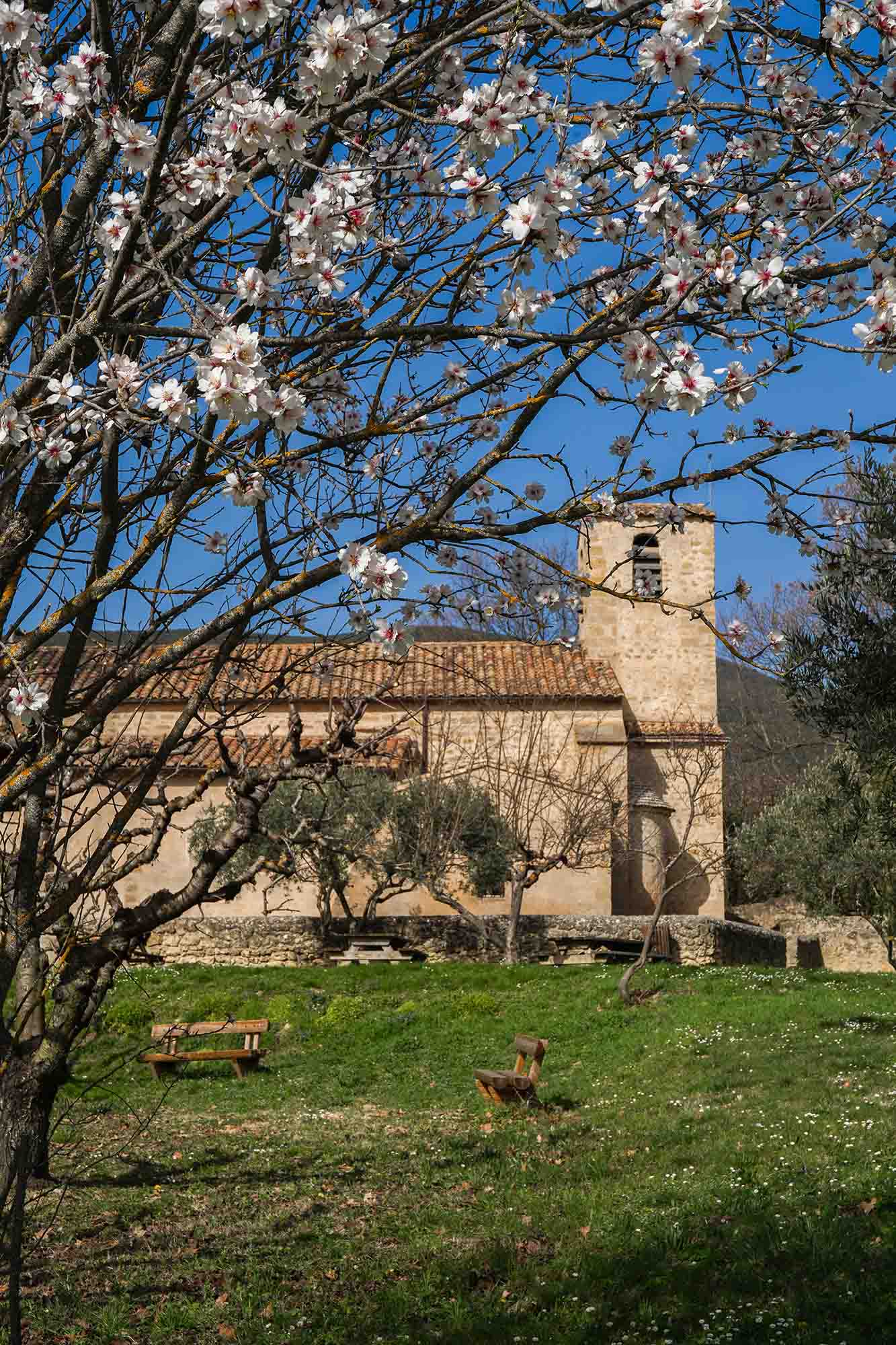
It is impossible to visit Vaugines without discovering its beautiful Saint-Barthélemy Church, one of the finest examples of the village’s Romanesque heritage. Dating from the 12th century, it has been listed as a Historic Monument since 2000.
Formerly the chapel of the Abbey of Psalmody, it overlooks the village in a simple and inspiring setting. Its Romanesque architecture, its exterior staircase leading to the bell tower, and the adjoining cemetery create a remarkable heritage ensemble, deeply rooted in the identity of Vaugines.
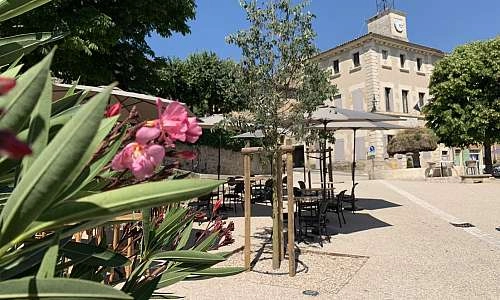
For many visitors, this place is also closely linked to the world of Marcel Pagnol and Claude Berri’s film diptych, Jean de Florette and Manon of the Spring. The church square and the nearby fountain have indeed preserved an almost unchanged atmosphere, extending the magic of cinema.
The site, peaceful and timeless, offers both a historical reading of the village and a sensitive immersion into the most authentic side of Provence. It is one of the highlights of a walk through Vaugines.
An iconic place, the church remains today a major heritage landmark and a strong symbol of the unique charm of Vaugines.
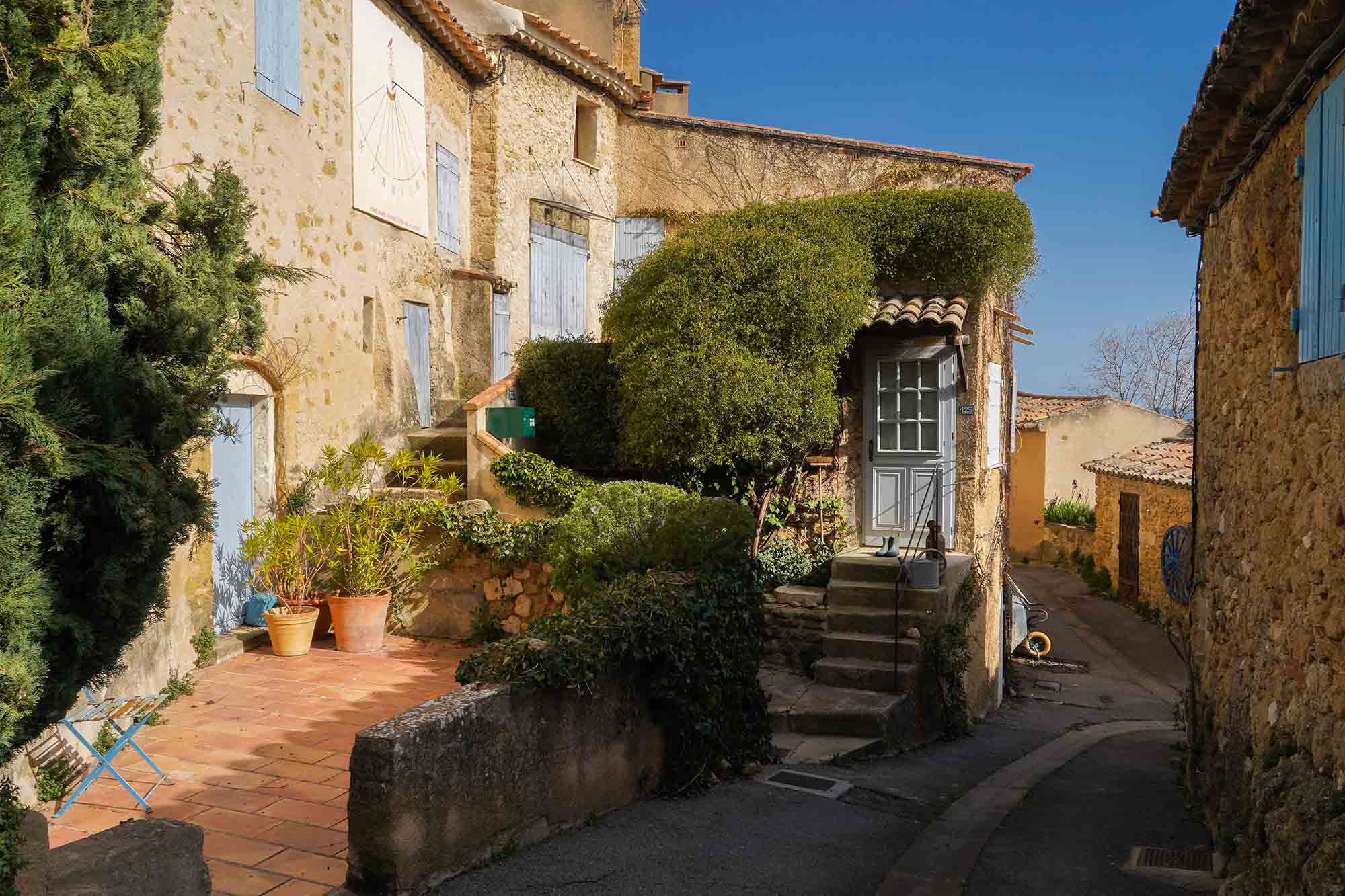
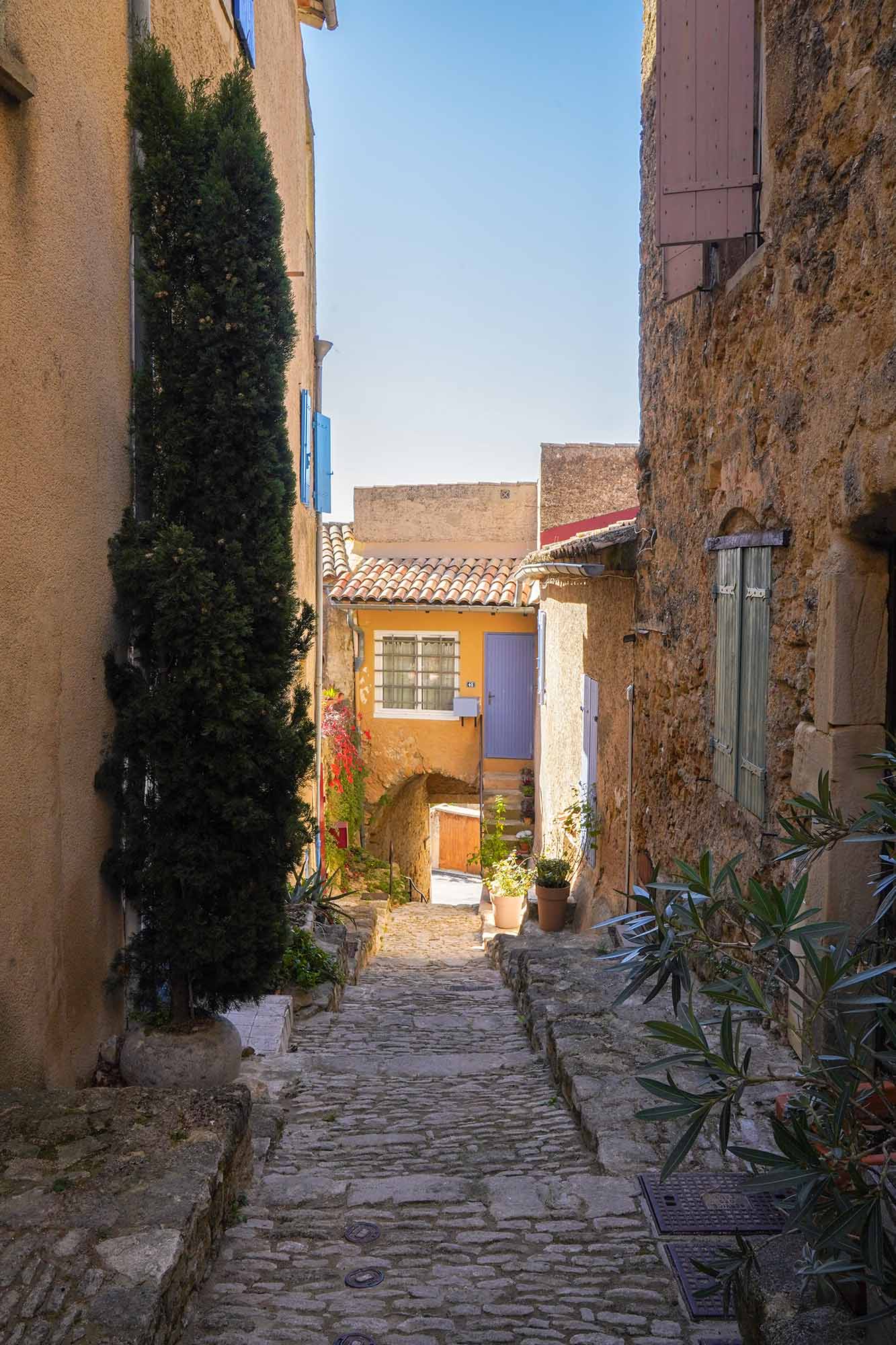
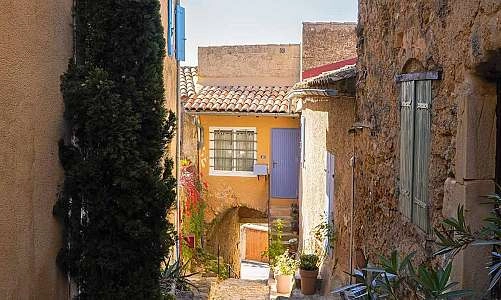
Walking through Vaugines means stepping into a Provençal setting of remarkable harmony. The village stretches at the foot of the hillside, between stone houses, winding streets, vaulted passageways, small squares and sunlit façades.
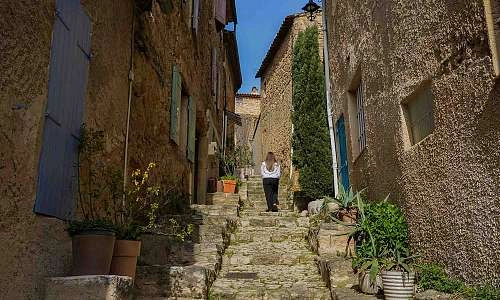
The heart of the village, relatively flat and accessible, can easily be explored in 45 minutes to 1 hour. The cobbled streets are pleasant to walk through and allow visitors to admire beautiful old houses, fountains, sundials and architectural details that tell the story of Vaugines.
As you stroll along, the village reveals a discreet yet very strong identity. Here, nothing is spectacular in a loud sense. Everything relies on the balance between heritage, silence, vegetation and authenticity.
Lovers of characterful villages will especially appreciate the untouched atmosphere of Vaugines, where time seems to slow down. It is this simple and profound sense of presence that creates all the charm of the visit.
Between a heritage walk and a contemplative escape, Vaugines offers a Provence that feels gentle, peaceful and deeply lived-in.
Walking through the heart of Vaugines is particularly easy and pleasant. The village centre is relatively flat, and the cobbled streets remain easy to explore for most visitors.
Allow between 45 minutes and 1 hour to fully enjoy the walk through the village, excluding hiking. The difficulty level is low, rated 1/5.
The walk only becomes more demanding if you choose to extend your visit towards the hiking trails of the Luberon massif.
Beyond its iconic church, Vaugines reveals a discreet yet remarkably rich heritage, between Provençal architecture, cinema memories, old streets and the small details that create all the charm of the village.
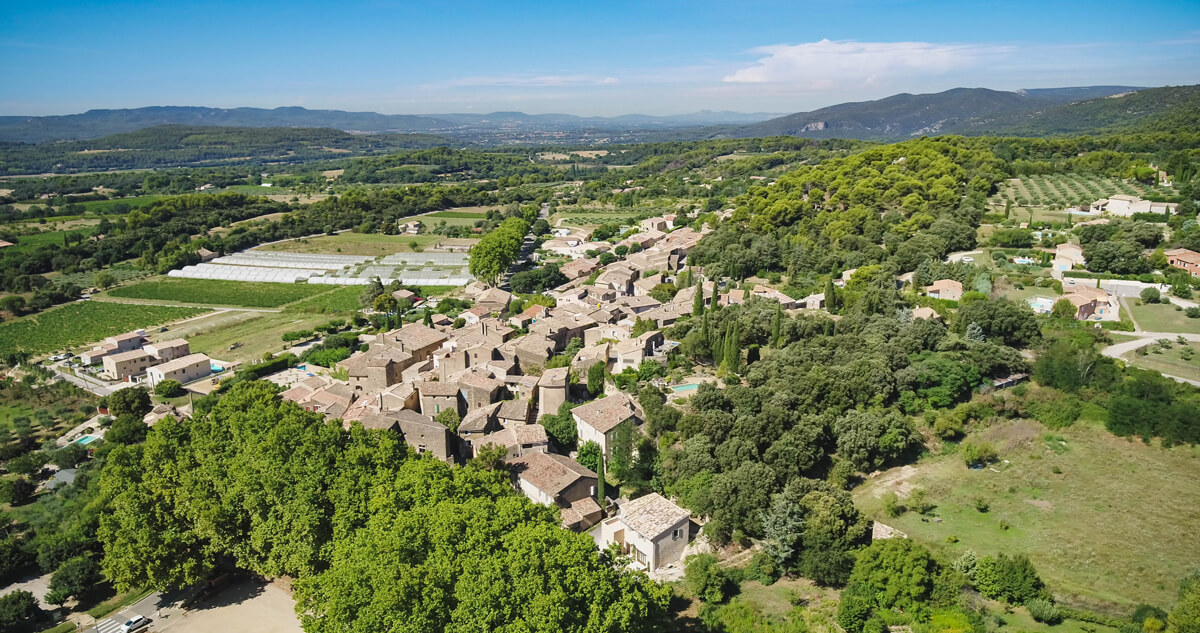
Walking through Vaugines, you will discover the Saint-Pierre and Saint-Barthélemy Church, the Saint-Joseph Chapel now transformed into a library, the Hôtel des Bouliers, several roadside shrines and many sundials visible throughout the streets.
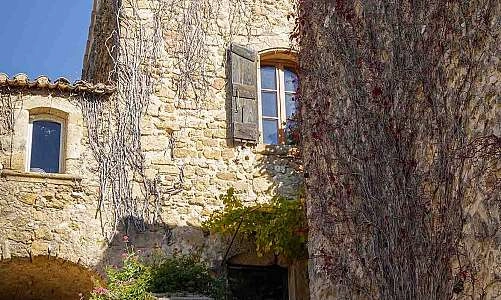
The village also invites visitors to admire beautiful 16th- and 17th-century houses, vaulted passageways, fossils embedded in some streets, fountains and the small details that reflect its ancient history and its roots in the South Luberon.
Between Romanesque heritage, film-set atmosphere, Provençal sweetness and open views over the surrounding landscapes, Vaugines stands out as a charming stop for those who love authentic villages.
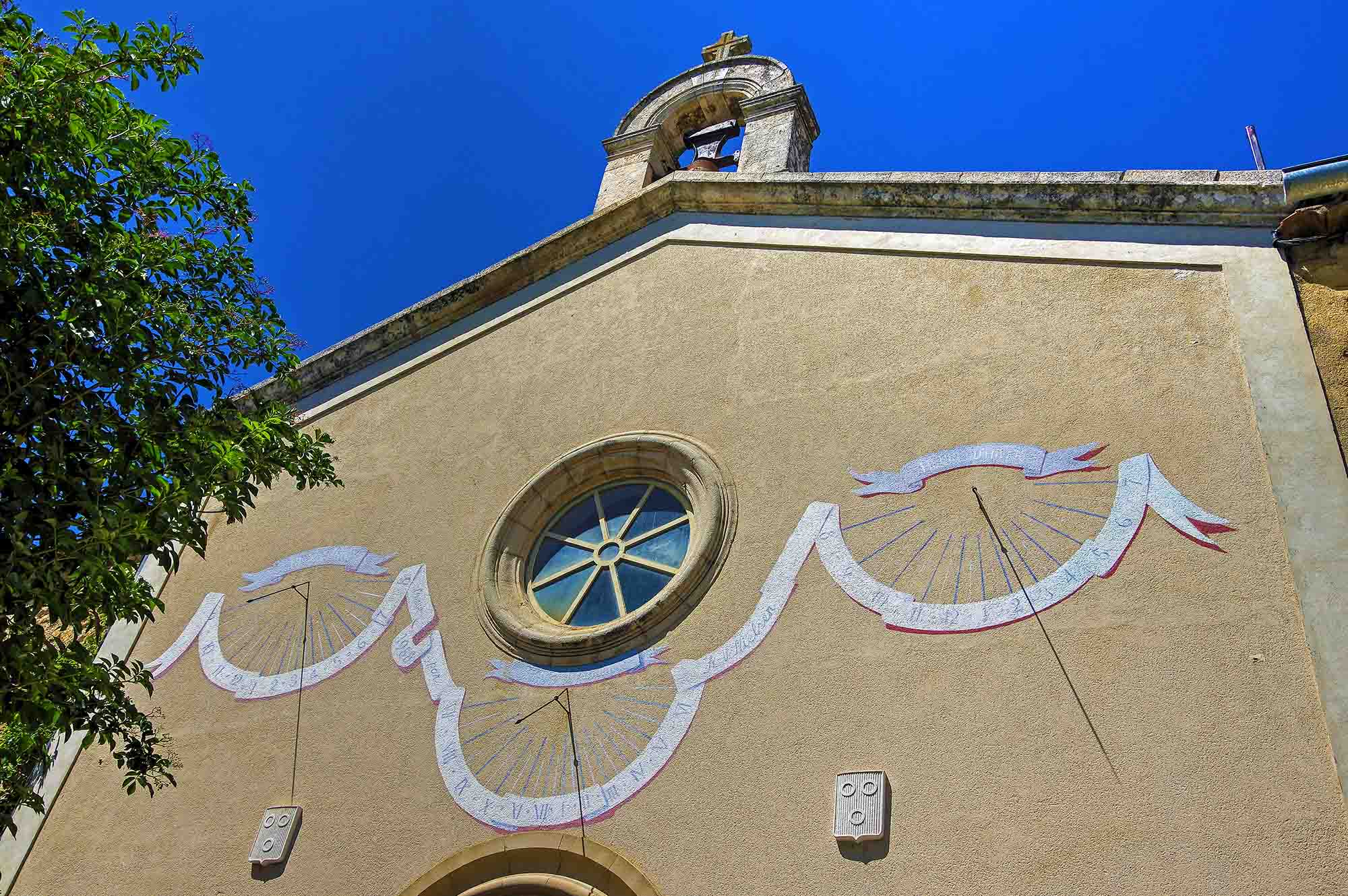
Built in 1873 thanks to the legacy of Joseph Bec, the Saint-Joseph Chapel was intended to provide the residents of Vaugines with a place of prayer more accessible than the parish church, which was considered too isolated.
Since 1988, the building has been converted into the municipal library, while preserving several elements of its religious past. Visitors can still see its holy water font and altar grille, which recall the original soul of the place.
Its southern façade deserves special attention with its remarkable triple sundial, a true gnomonic achievement showing solar time, winter time and summer time.
This chapel-library is one of the most original heritage curiosities in Vaugines and fits perfectly into a walk through the village.
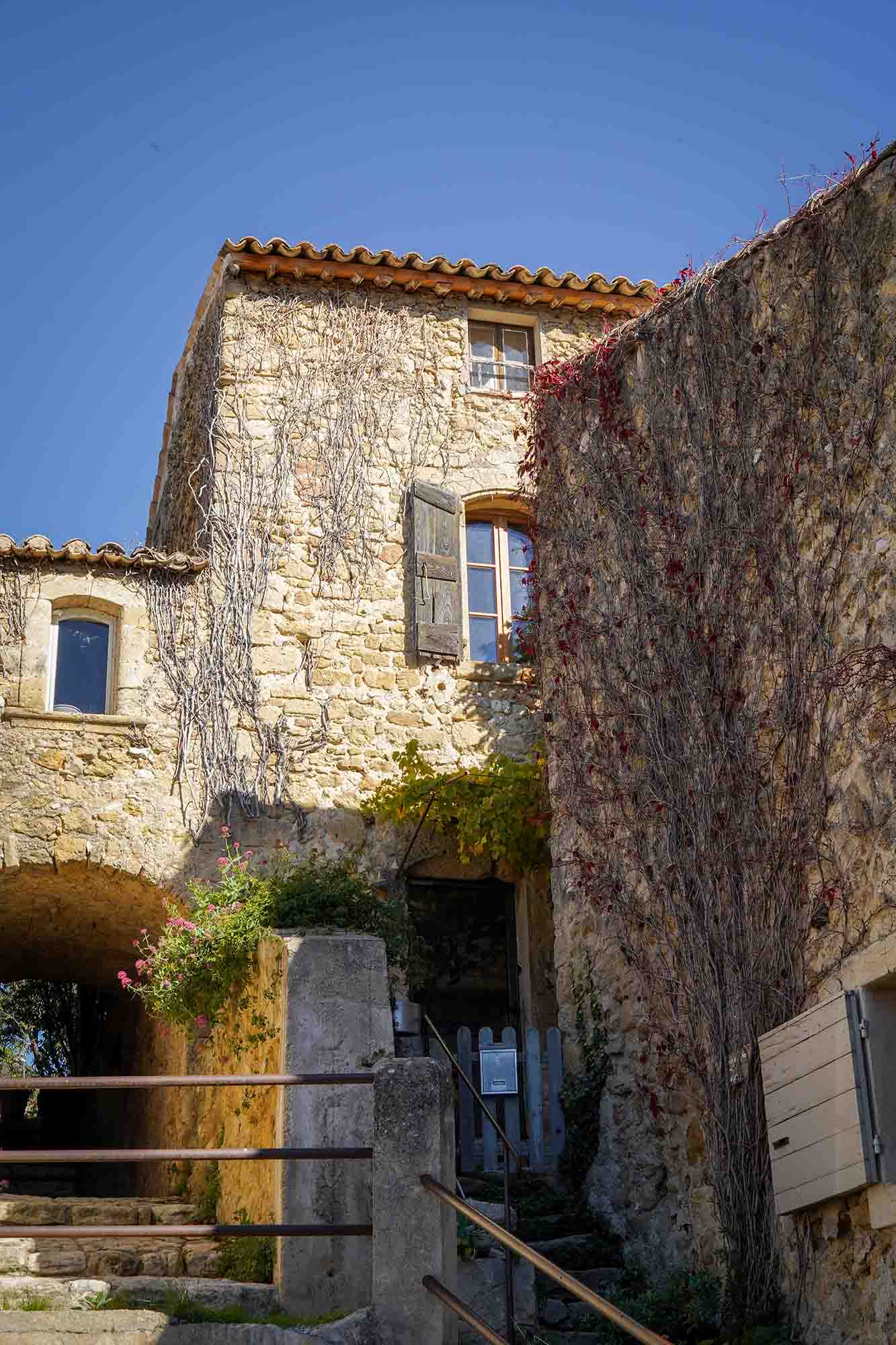
In the heart of Vaugines, the Hôtel des Bouliers is one of the village’s most beautiful residences. Protected as a Historic Monument since 11 October 1984, it elegantly reflects local architecture and the discreet refinement of old Luberon houses.
Its presence recalls the historical importance of certain noble families and the evolution of the village over the centuries. Integrated into the old village fabric, it fully contributes to the heritage identity of Vaugines.
By simply looking up while strolling through the village, visitors can admire the simple nobility of beautiful Provençal residences, with their stone façades, harmonious proportions and carefully crafted architectural details.
The Hôtel des Bouliers is therefore an interesting heritage stop for better understanding the architectural history of the village.
Strolling through Vaugines also means taking the time to notice the many sundials scattered throughout the streets, from the town hall square to Rue Vieille. These heritage details give the village a discreet and poetic personality.
The most remarkable one decorates the southern façade of Saint-Joseph Chapel. This triple sundial, created by Mr. Nielsen, simultaneously shows solar time, winter time and summer time, illustrating craftsmanship that is both scientific and artistic.
Three roadside shrines placed at the cardinal points complete this sensitive reading of the village. Among them, the Notre-Dame de Vaugines shrine, restored in 2002, also recalls the memory of writer Henri Bosco.
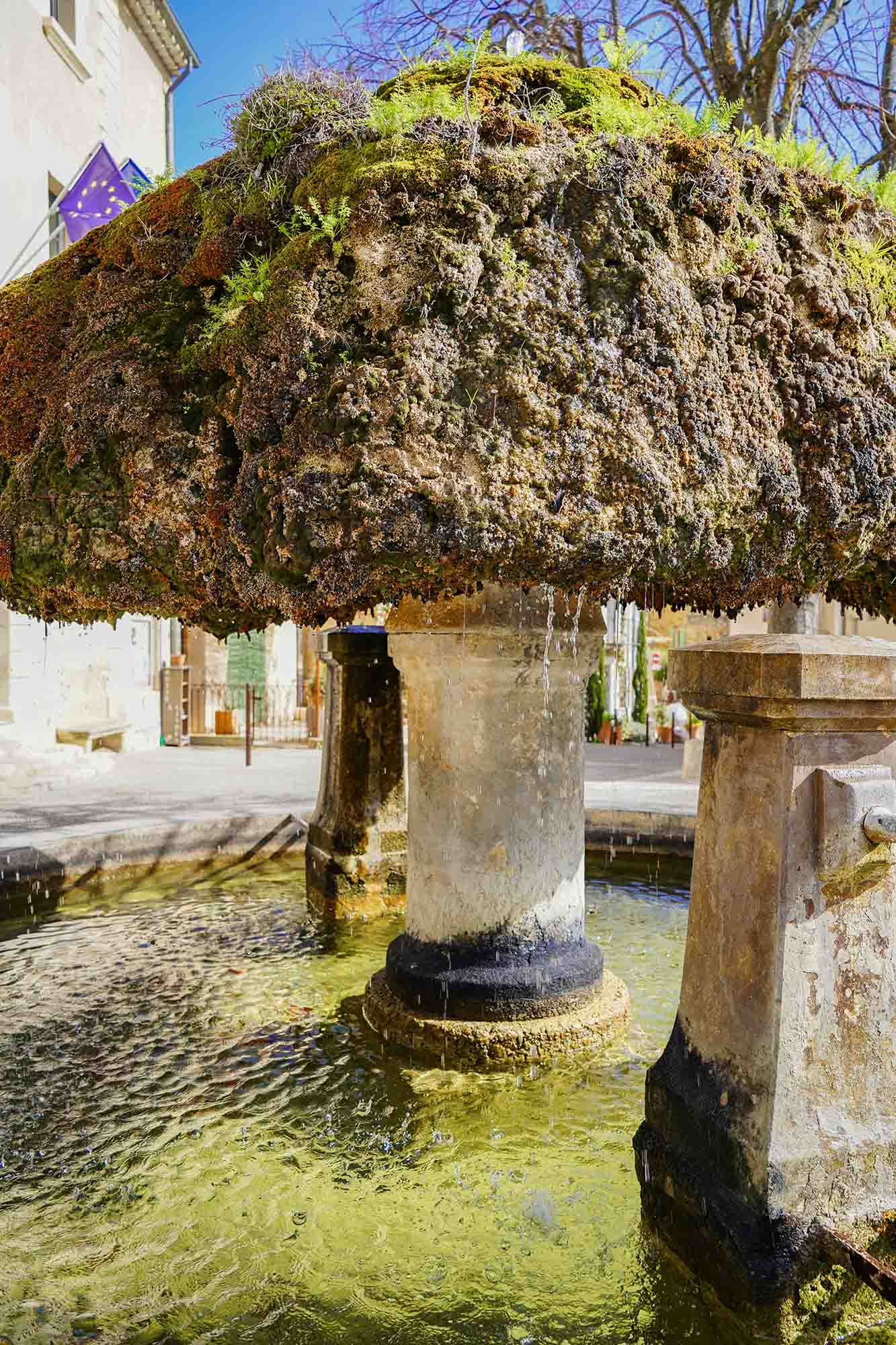
For many visitors, Vaugines remains inseparable from Claude Berri’s cinematic diptych, Jean de Florette and Manon of the Spring, filmed in 1986. The village perfectly embodies the image of a peaceful, mineral and timeless Provençal village.
Unlike other filming locations transformed over time, the church square and the fountain have remained almost untouched. This preservation strongly enhances the emotion felt on site by those who know the films.
A visit to Vaugines therefore becomes an immersion into a cinematic Provence, but also into a very real Provence: authentic, quiet and deeply lived-in.
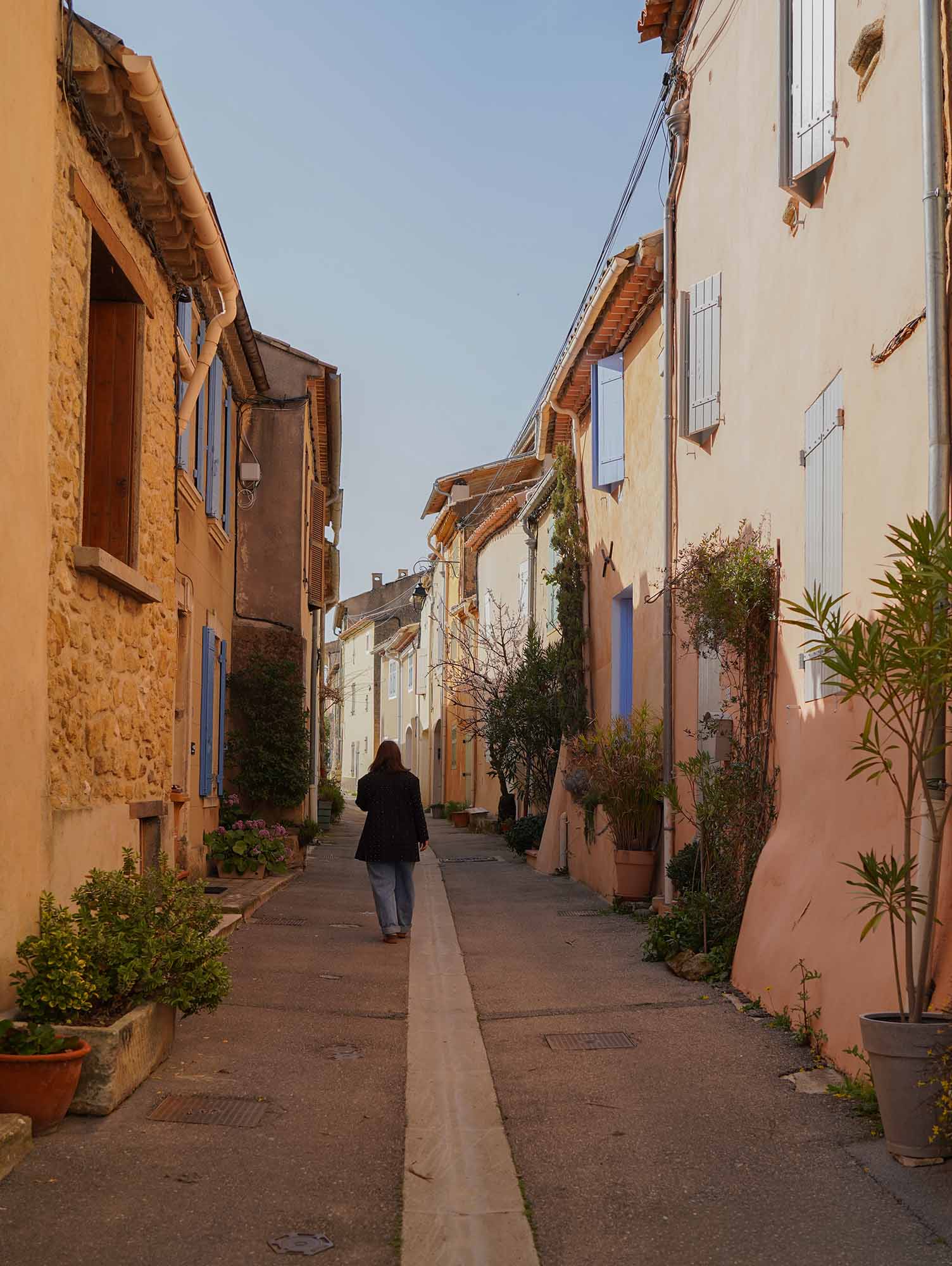
The charm of Vaugines reveals itself through its winding streets, vaulted passageways and beautiful 16th- and 17th-century houses. This dense and harmonious urban fabric tells the story of a village once gathered around its castle, now disappeared.
As you stroll through the old village, you discover a sober yet precious architecture made of stone, weathered façades, carved details, old fountains and small openings that suddenly reveal the light of the Luberon.
Some streets even preserve visible fossils in the walls or on the ground, like silent traces of the geological and architectural history of the village.
This walk through old Vaugines is one of the simplest and most authentic pleasures to enjoy during your visit.
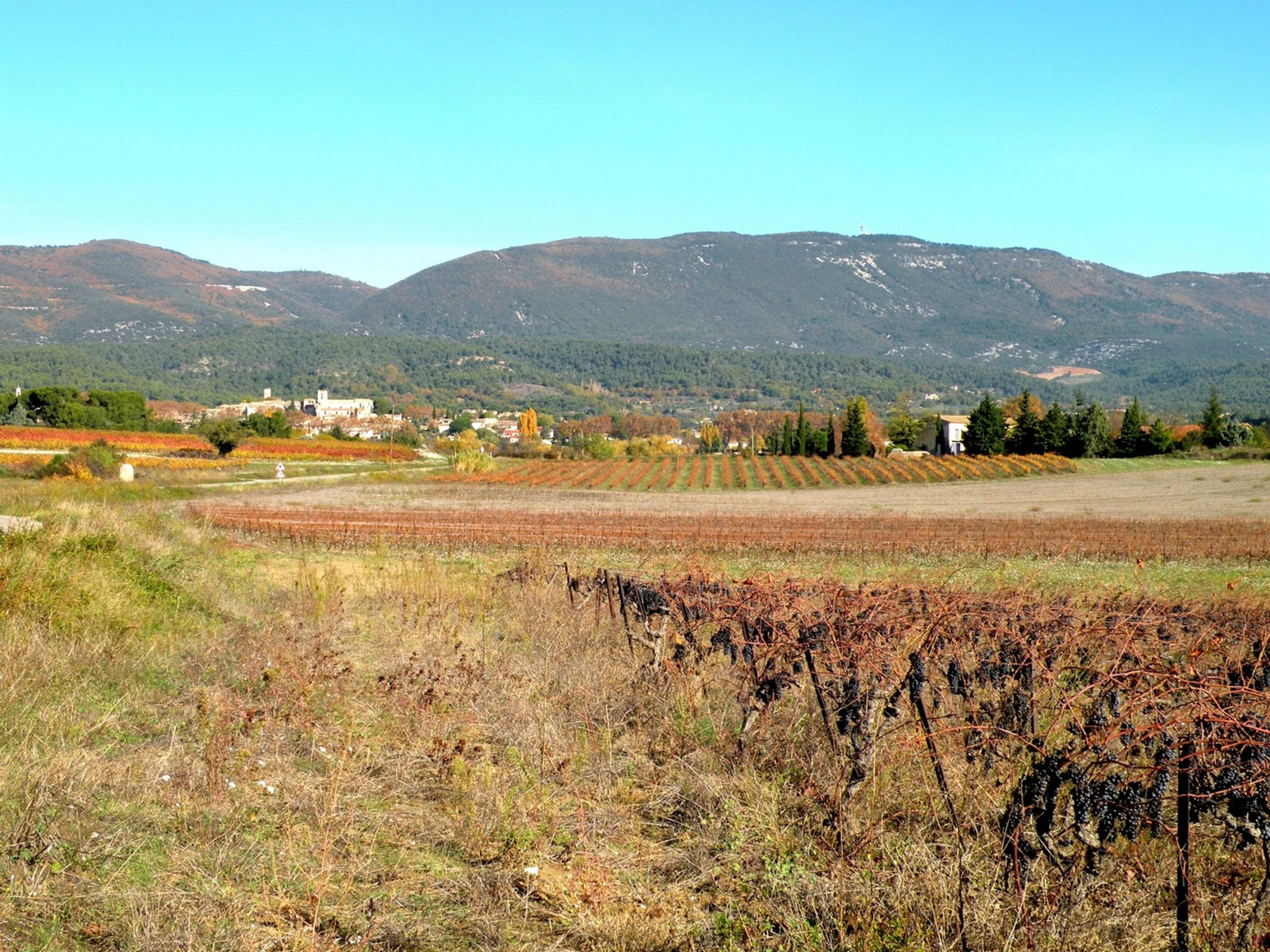
Starting from Vaugines, the circular hike towards Cucuron offers a wonderful opportunity to discover the typical landscapes of the South Luberon. This route of around 10 km and 3.5 hours of walking crosses an environment of vineyards, olive trees and wide open views.
Without any major difficulty, this trail remains accessible to a wide audience and connects two characterful villages in a peaceful and bright atmosphere. Along the way, panoramic views of Sainte-Victoire enhance the experience.
Arriving in Cucuron, with its famous Bassin de l’Étang, adds a lovely gourmet and heritage pause to this walk between nature and villages.
It is an ideal outing to extend your visit to Vaugines at a gentle pace, surrounded by agricultural landscapes and the hills of the Luberon.
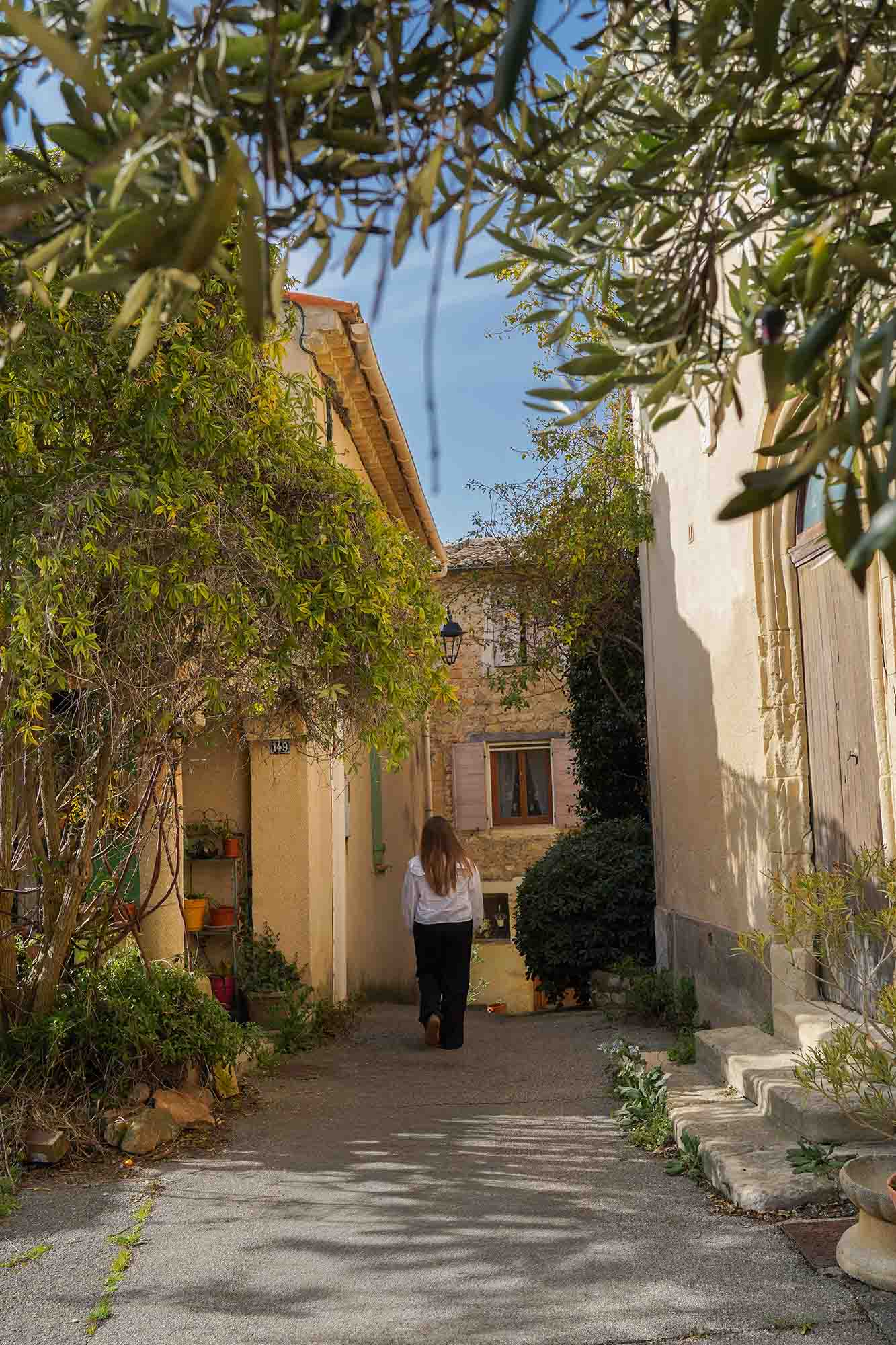
In Vaugines, visitors come as much for the walk as for the feeling of a Provençal village that has remained true to itself. The visit is made up of small discoveries, quiet pauses, beautiful viewpoints and charming detours.
Take time to visit the church, stroll through the streets, observe the sundials, then extend the experience towards Cucuron or Lourmarin for a gentle and relaxing day in the South Luberon.
Stroll through the village
Cobbled streets, shaded squares, stone houses and a peaceful atmosphere invite you to slow down.
Rediscover the filming locations
The church, the fountain and the square immerse visitors in the world of Claude Berri’s films.
Observe heritage details
Roadside shrines, sundials, beautiful houses and vaulted passageways shape the visit.
Go hiking
The village is a great starting point for reaching Cucuron through vineyards and olive groves.
Enjoy nearby markets
The Cucuron market on Tuesdays and the Lourmarin market on Fridays perfectly complete the getaway.
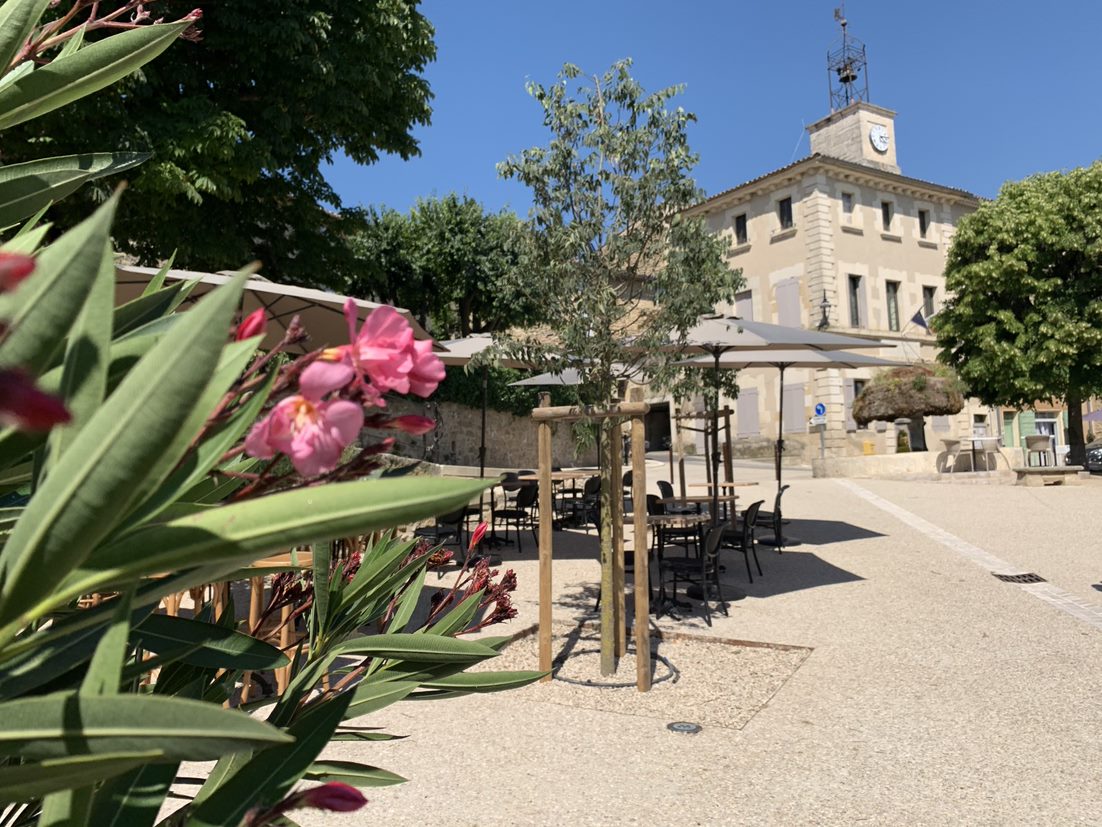
Some villages impress through their grandeur, while others touch you through their authenticity. Vaugines clearly belongs to the second category. Here, everything feels measured, balanced and deeply sincere.
People come for the Romanesque church, for the memory of cinema, for the stone streets, for the light on the façades and for the feeling of a peaceful Provence far from the bustle. They leave with the memory of a place that is simple, beautiful and intensely alive in its sobriety.
More than just a Luberon village, Vaugines offers a sensitive experience combining heritage, silence, cinema, nature and the gentle Provençal way of life.
Whether you are a lover of authentic villages, passionate about heritage, an occasional walker or simply curious to rediscover the film settings of Pagnol’s world on screen, Vaugines fully deserves its place among the most charming stops in the South Luberon.
Photo gallery
Practical information on Vaugines in Luberon
Opening times and periods
From 01/01 to 31/12/2019, daily.
Price(s)
Free access.
Informations
Languages