Sommaire
Location: Luberon, Vaucluse (84), Provence-Alpes-Côte d’Azur
Label: hilltop village listed among the Most Beautiful Villages of France
Recommended visit time: allow 2 to 4 hours to explore the historic centre, or a full day if you also wish to visit Sénanque Abbey or the Village des Bories.
Gordes market: every Tuesday morning in the centre of the village. In summer, arriving early makes parking easier.
Access: approximately 40 minutes from Avignon and 20 minutes from Cavaillon.
By car: from the A7 motorway, take exit 25 for Cavaillon, then follow the D15 towards Gordes.
By bus: from Cavaillon, take bus 907 to Coustellet, then change to bus 917. View information about the ZOU! public transport network.
Parking: paid car parks are available around the village centre. Find out where to park in Gordes
Getting around: the historic centre is best explored on foot, and traffic is regulated during the tourist season.
What to see in Gordes: Château de Gordes, the cellars of the Palais Saint-Firmin, Sénanque Abbey, the Village des Bories and the Rocher Bel-Air viewpoint.
Things to do in Gordes: join a guided tour, go hiking or discover local art galleries and artists’ studios.
Located in the Vaucluse, on the foothills of the Monts de Vaucluse and facing the Luberon mountain range, Gordes is one of the most visited villages in Provence. Listed among the Most Beautiful Villages of France in the Luberon, its historic centre is built around the château, with cobbled lanes, stone houses and sweeping views over the Calavon Valley.
What should you see in Gordes, how much time should you allow and where can you park? This guide features the village’s must-see sites, a suggested itinerary for visiting Gordes in one day, practical information and our ideas for exploring the area around Gordes.
Plan your visit to Gordes
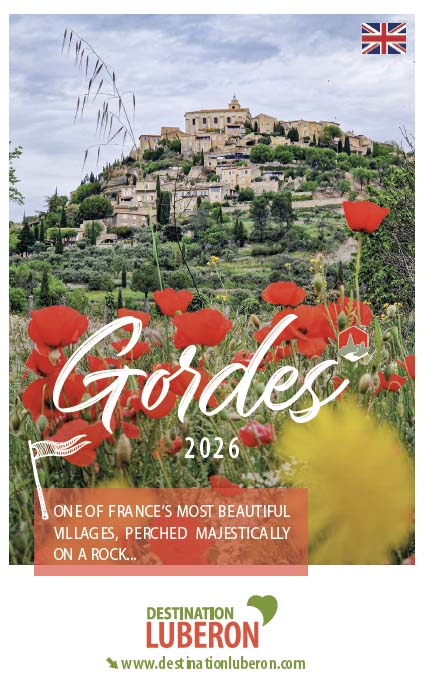
Download our free tourist map to explore the historic centre, locate the must-see sights of Gordes and find the most beautiful viewpoints.
One day is enough to explore the historic centre of Gordes and visit one of the major attractions nearby. Follow this simple itinerary to make the most of the village at a relaxed pace.
Morning: start at the Rocher Bel-Air viewpoint
Admire the iconic view over Gordes before heading into the centre of the village.
Late morning: explore the historic centre
Wander through the narrow streets, discover the Place du Château and visit the cellars of the Palais Saint-Firmin.
Lunchtime: take a break in the village
Relax on a terrace or choose one of the many excellent places to eat in Gordes.
Afternoon: choose a site near Gordes
Visit Sénanque Abbey or the Village des Bories, depending on your interests. Or why not discover both?
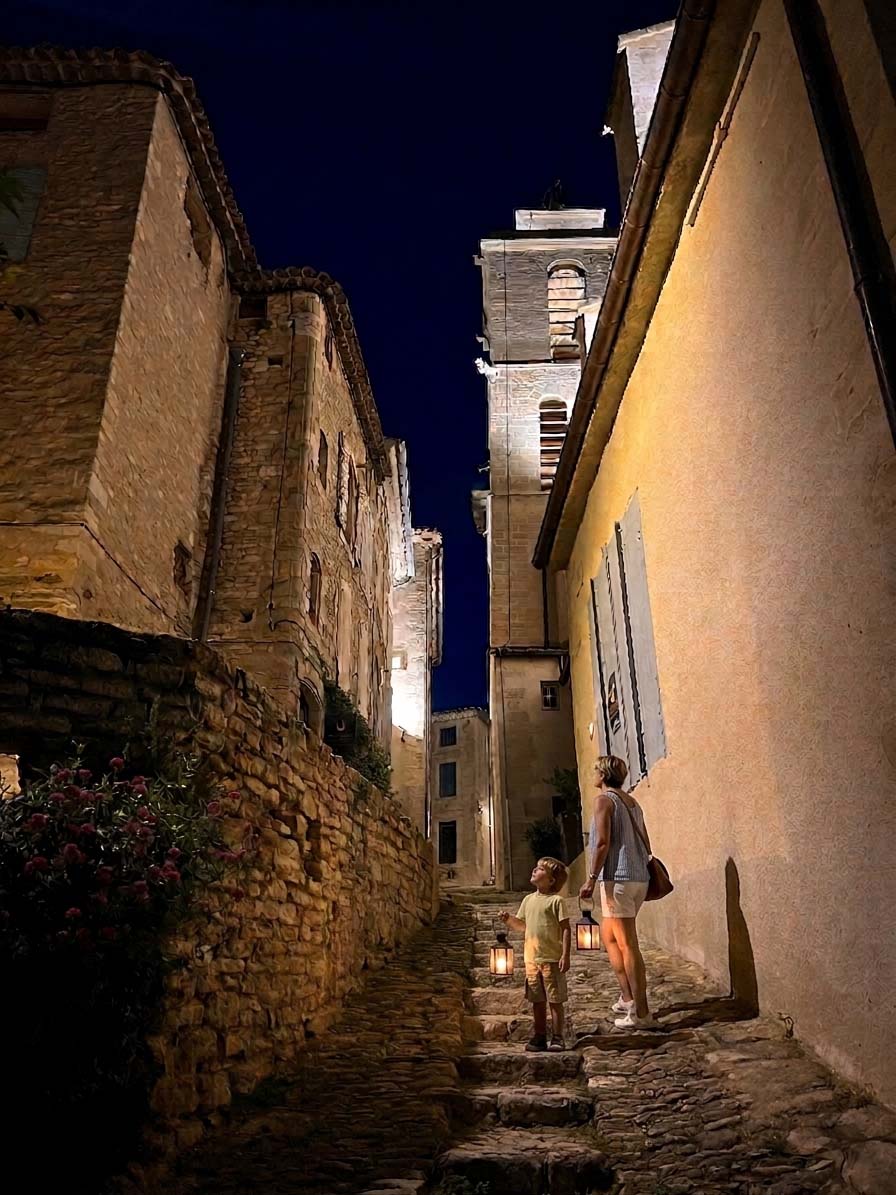
Our suggestion for the evening
In summer, extend your day with an evening guided tour. As the heat begins to fade and the narrow streets grow quieter, Gordes reveals a more intimate atmosphere, illuminated by lanterns and brought to life through the stories shared by your guide.
How long does it take to visit Gordes? Allow between 2 and 4 hours to explore the historic centre, or a full day if you also wish to visit Sénanque Abbey or the Village des Bories.


5 good reasons to visit Gordes
 Discover one of the Most Beautiful Villages of France, in the heart of the Luberon Regional Nature Park
  Visit Sénanque Abbey, a remarkable example of Cistercian architecture
  Wander through the cobbled lanes and narrow passageways lined with stone houses
  Admire the village skyline from the Rocher Bel-Air viewpoint
  Enjoy the exhibitions, art galleries and Soirées d’Été de Gordes summer events
 As soon as you arrive, the striking silhouette of Gordes, clinging to its rocky promontory, rises above the Calavon Valley.
The village is best explored on foot, along its cobbled lanes, narrow passageways and stone-built houses. Around the château, the streets lead from small squares and fountains to art galleries and sweeping views over the Luberon landscapes. In the heart of the village, take a break on the sunlit square beside the fountain that gives it so much charm.
Take time to step away from the busiest routes: beyond a low stone wall or along a narrow lane, Gordes reveals quieter viewpoints and a different atmosphere at every hour of the day.

Each season reveals a different side of Gordes. The village is very popular in summer, while spring, autumn and winter offer a more peaceful atmosphere.
Outside the peak season, milder temperatures and fewer visitors make it easier to take your time, explore the narrow streets, admire the landscapes and fully appreciate the heritage of Gordes.
Gordes can be visited all year round, but its atmosphere changes with the seasons. Lively and busier in summer, the village is quieter and more relaxed in spring, autumn and winter.
In spring, the surrounding fields are covered with wildflowers, while the mild temperatures are ideal for exploring the bories, the traditional dry-stone huts that form an emblematic part of the region’s rural heritage.
In summer, the village comes alive with Provençal markets, sunlit terraces and cultural festivals. The blooming lavender fields offer a feast for both the eyes and the senses.
In autumn, the landscapes are transformed by rich, glowing colours. Vineyards, oak trees and hills create an ideal setting for walks and photography.
In winter, Gordes regains a peaceful and intimate atmosphere. Resembling a Provençal nativity scene, the village is bathed in soft light and invites visitors to discover it at a quieter pace.

Standing at the highest point of the village, this iconic Luberon landmark has overlooked Gordes since the 11th century. Listed as a historic monument, the Château de Gordes combines medieval and Renaissance architecture. Today, it hosts art exhibitions and cultural events, while offering impressive views over the Calavon Valley.
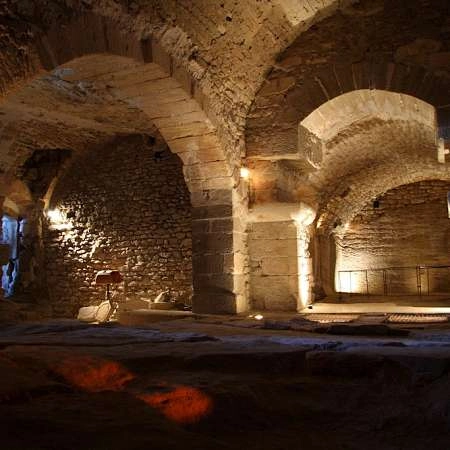
A fascinating underground world lies beneath the village streets. The Saint-Firmin Palace Cellars feature a carefully restored troglodyte network, where visitors can discover olive presses, cisterns and vaulted staircases. They offer a valuable insight into Gordes’ artisanal past.


One of the most photographed treasures in the Luberon. Founded in 1148, Sénanque Abbey is a Cistercian monastery that is still home to a community of monks. It is open to visitors throughout the year in a peaceful setting, surrounded by lavender fields in summer.
Located just a few minutes from the centre of Gordes, the Village of Bories is listed as a historic monument. It brings together ancient dry-stone huts built without mortar, providing a unique example of Provençal vernacular heritage. A timeless experience in the heart of the garrigue.

Where can you take the best photos of Gordes?
The Rocher Bel-Air viewpoint offers one of the finest views of Gordes and its striking silhouette clinging to the hillside. Easily accessible, this viewpoint is particularly popular at the end of the day, when the light highlights the village’s stone façades.
Why not extend your discovery of Gordes into the great outdoors? Several hiking trails allow you to explore the surrounding countryside at your own pace.
Between garrigue, dry-stone walls and wild valleys, nature reveals itself step by step. The trails offer beautiful views over the Monts de Vaucluse and lead past unexpected heritage sites along the way.

Our suggestion
The Col de Gordes hike
This accessible circular trail connects the village streets with the panoramic heights of Bel-Air. The path winds past dry-stone walls, garrigue, a Roman-inspired wayside shrine and geological formations dating back more than 100 million years. An immersive experience combining nature, culture and history.
Nature and remembrance
The Gordes Resistance trail
Wilder and more challenging, this route crosses the Sénancole gorges and connects several of the area’s iconic sites. It leads to Sénanque Abbey, passes through the Village of Bories and crosses places shaped by the history of the French Resistance.
Looking for some fresh air? Browse all the hikes around Gordes and discover the area in a different way, away from the bustle and at your own pace.
A visit to Gordes can easily be extended into the landscapes of the Monts de Vaucluse and the Luberon. Just a few kilometres away, Sénanque Abbey and the Village of Bories offer a deeper insight into the local heritage, combining Cistercian architecture with traditional dry-stone buildings.
Continue on to Goult and its peaceful lanes, the ochre cliffs of Roussillon, the hilltop village of Ménerbes or Old Oppède, a medieval village clinging to the slopes of the Petit Luberon. Further north, Fontaine-de-Vaucluse offers a different atmosphere around the source of the Sorgue and its emerald waters.

The history of Gordes can be read through its location, its château and the activities that have shaped the village. Inhabited since Antiquity, this naturally defensive site gradually developed around its rocky promontory.
The origins of Gordes date back to the Gallo-Roman period. During the Middle Ages, the promontory was fortified and the village developed around the château, whose architecture still combines medieval and Renaissance features today.
In the 17th and 18th centuries, the local economy was based in particular on olive oil production, silk farming and various crafts. Like many rural villages, Gordes then experienced a population exodus during the 19th century, followed by the consequences of the First World War.
In the Luberon, villages were established on high ground to meet the need for surveillance and protection during periods of instability. From the Middle Ages onwards, communities gathered around fortified sites built on promontories. Gordes therefore developed around its château, while other villages, such as Old Oppède, also occupied naturally defensive positions.
Gordes is renowned for more than its architecture. The village also boasts a rich cultural and artistic heritage, shaped by the artists who found its light, landscapes and atmosphere especially inspiring.
From the 1950s and 1960s onwards, artists such as André Lhote, Marc Chagall and photographer Willy Ronis contributed to the village’s cultural reputation. The opening of Victor Vasarely’s educational museum in the château in 1970, followed by exhibitions devoted to Pol Mara, further strengthened Gordes’ artistic identity.
❤ Our favourite
The Festival de Gordes – Les Soirées d’Été takes place at the Théâtre des Terrasses, a remarkable venue set between the cliff and the Luberon plain. At dusk, concerts, comedy and live performances unfold in a striking mineral setting overlooking the landscape.

What to see in Gordes
DiscoverWhere to stay in Gordes
DiscoverWhere to eat in Gordes
DiscoverEvents in Gordes
DiscoverVillages of Luberon
Our villages in Luberon are gorgous, you will love to stroll through the cobbled streets. Take the time to visit and discover all these villages Luberon and Provence are so famous for!
Several paid car parks are available around the centre of Gordes. Parking spaces in the heart of the village are limited, particularly during the summer and on Tuesday mornings, when the weekly market takes place.
Practical parking information
Once you have parked, the historic centre is easy to explore on foot. For the latest parking conditions, rates and practical information, visit the parking page on the Gordes municipal website.
Photo gallery


Frequently asked questions
When is the best time to visit Gordes?
Spring (April to June) and autumn (September to October) are ideal seasons to visit Gordes, with pleasant temperatures, peaceful surroundings and beautiful natural colours.
What are the must-see sites in Gordes?
Don’t miss the Château de Gordes, the Sénanque Abbey, the Village des Bories and the Palais Saint-Firmin cellars. The Rocher Bel-Air viewpoint also offers an exceptional panoramic view.
Is the Sénanque Abbey open all year round?
Yes, the Sénanque Abbey is open all year. Guided tours are available, with opening times that vary by season. Lavender usually blooms in July.
How much time should I plan to visit Gordes?
A half-day is enough for a first visit. Plan a full day if you want to explore the cultural sites, enjoy lunch in the village and discover the surrounding area.
Where can I park in Gordes?
Parking is paid daily from 8am to 7pm, via parking meters or the PayByPhone app. Six car parks are located around the village, including a large one at the entrance (Place René Cassin) reserved for camper vans and buses.
30 minutes free with a ticket. Rates: €8 up to 4 hours, €10 up to 11am, €30 for the full day.
Camper vans must park 200 metres from the centre (€15 / 24h). Buses are not allowed inside the village and must park at the entrance.
There are also nine blue zone spaces in town, with a 30-minute time limit using a parking disc.
Note: Avoid driving through the village on Tuesday mornings due to the weekly market.
Which villages should I visit near Gordes?
Several classified or picturesque villages surround Gordes and are worth a visit. Nearby highlights include Roussillon with its famous ochre cliffs, Ménerbes with its authentic charm, Oppède-le-Vieux with its medieval feel, and Bonnieux, perched opposite Mont Ventoux. A little further south, Lourmarin is also a must-see.
These villages are among the most beautiful in the Luberon and each offers a unique atmosphere of heritage, nature and Provençal art de vivre.
Where to eat in Gordes with a view?
Several restaurants in Gordes offer breathtaking views over the Luberon valley. Among the most popular:
Booking is recommended, especially in summer.